
How Web3 Is Redefining Digital Ownership, Privacy, and the Future of the Internet
The Evolution of the Internet: From Information Sharing to Digital Ownership
The internet has never been a static technology. Since its creation, it has continuously evolved, changing the way people communicate, create, exchange value, and interact with digital environments. Each stage of the internet’s development has introduced new possibilities while also creating new challenges related to control, privacy, and ownership.
The first generation of the internet, commonly known as Web1, was built around openness and decentralization. During this period, the web primarily functioned as a global information network where users could access content but had limited opportunities to participate actively. Websites were mostly static, and individuals consumed information rather than creating and controlling it.
The arrival of Web2 transformed the internet into a highly interactive environment. Social networks, online marketplaces, streaming platforms, and digital services allowed billions of people to publish content, communicate instantly, and build online communities. Platforms such as social media networks, search engines, and large technology companies became the central infrastructure of digital life.
However, this convenience came with a significant trade-off. While users created enormous amounts of valuable content and generated massive amounts of data, ownership and control remained concentrated in the hands of centralized companies. These platforms decided how information was stored, shared, monetized, and accessed.
Web3 represents the next stage of this evolution. Instead of an internet controlled primarily by corporations, Web3 introduces a model where users can own their digital identities, assets, and contributions. Through blockchain technology, cryptocurrencies, smart contracts, and decentralized applications, Web3 aims to create an internet where individuals have greater control over their digital presence.
At its core, Web3 introduces a fundamental change: moving from a system where users participate in digital platforms to a system where users can actually own parts of the digital world they help create.
The Concept of Digital Ownership in the Web3 Era
One of the biggest innovations introduced by Web3 is the idea of true digital ownership. In traditional Web2 platforms, users often create digital assets without actually owning them.
For example, a person may spend years building a social media profile, collecting followers, creating content, or purchasing digital items inside an online game. However, these assets usually remain controlled by the platform. If the company changes its rules, shuts down the service, suspends an account, or modifies access policies, users can lose years of digital history and value.
Web3 challenges this model by introducing ownership mechanisms based on blockchain technology. Instead of storing ownership records inside private company databases, information can be recorded on decentralized networks that are transparent, verifiable, and resistant to unauthorized changes.
This creates a new relationship between individuals and digital assets. Users are no longer simply customers of online platforms; they become participants who can directly control and exchange digital property.
Digital ownership in Web3 applies to many different types of assets, including artwork, music, virtual goods, gaming items, online identities, memberships, digital certificates, and even parts of decentralized communities.
The foundation behind this transformation is the blockchain — a distributed database maintained by a network of computers rather than a single organization.
Blockchain: The Technology Behind Digital Ownership
Blockchain technology serves as the foundation of Web3 by creating a decentralized system for recording and verifying information.
A blockchain can be compared to a public digital ledger that stores records of transactions and ownership. Instead of one company controlling this database, thousands of computers around the world maintain synchronized copies of the same information.
When a new transaction occurs, such as transferring ownership of a digital asset, the information is verified by the network and added permanently to the blockchain. Once recorded, the data cannot easily be changed or removed.
This creates several important advantages for digital ownership.
First, blockchain provides transparency. Anyone can verify ownership history and transaction records without needing permission from a central authority.
Second, blockchain creates trust between participants who may not know each other. Instead of relying on a company or intermediary to confirm ownership, users can rely on cryptographic verification.
Third, blockchain enables digital assets to exist independently from individual platforms. An asset recorded on a blockchain is not automatically tied to one company’s database. This creates the possibility of moving digital property between different applications and ecosystems.
Ethereum is one of the most influential blockchain networks supporting Web3 development. Unlike traditional databases, Ethereum operates as a decentralized global computer where developers can create applications, digital assets, and automated agreements called smart contracts.
NFTs and the Rise of Verifiable Digital Ownership
Non-fungible tokens, commonly known as NFTs, became one of the most recognizable technologies associated with Web3 because they introduced a new approach to owning digital objects.
An NFT is a unique blockchain-based token that represents ownership of a specific digital or physical asset. Unlike cryptocurrencies such as Bitcoin or Ethereum, where each unit is interchangeable, every NFT contains unique information that distinguishes it from others.
NFTs can represent many different types of assets. They can be digital artwork, music tracks, video content, virtual land, gaming items, event tickets, memberships, certificates, or access rights.
The most important innovation of NFTs is not simply the ability to create digital collectibles. Their deeper significance lies in providing a permanent and verifiable record of ownership.
Before blockchain technology, proving ownership of a digital file was extremely difficult. A digital image, song, or video could be copied infinitely, making traditional ownership models complicated.
NFTs introduce scarcity and authenticity into the digital environment. The blockchain records who created an asset, who owns it, and how ownership has changed over time.
For creators, this creates new opportunities. Artists, musicians, and developers can sell digital products directly to audiences without relying entirely on traditional intermediaries.
For collectors, NFTs provide transparent ownership records and the ability to trade digital assets through decentralized marketplaces.
The relationship between creators and audiences also changes. Smart contracts can automatically define rules for how digital assets are used, transferred, or monetized. For example, an artist may include royalty mechanisms that allow them to receive compensation whenever their NFT is resold in the future.
This creates a more direct connection between creators and communities.
Fractional Ownership: Making Digital Assets More Accessible
Another important development enabled by blockchain technology is fractional ownership.
Traditionally, valuable assets were usually owned by a single person or organization. Expensive artwork, virtual properties, rare collectibles, and investment assets often required significant financial resources, limiting access to a small group of buyers.
Blockchain allows these assets to be divided into smaller digital units through tokenization.
Tokenization transforms ownership rights into blockchain-based tokens that can represent fractions of an asset. Instead of purchasing an entire digital property or collectible, multiple individuals can own smaller portions of the same asset.
This creates new possibilities for participation in digital economies.
A person who could not afford an entire virtual property in a metaverse environment may be able to purchase a small percentage of ownership. A community of collectors can collectively own valuable digital artwork. Investors can participate in markets that were previously inaccessible.
Fractional ownership also improves liquidity. Instead of waiting for an entire asset to be sold, owners can trade smaller portions through decentralized platforms.
This model changes the traditional idea of ownership by allowing more people to participate in digital economies.
Why Web3 Matters: How the Next Generation of the Internet Is Changing Ownership, Innovation, and Digital Power
The Internet Is Entering a New Era
The internet has always been shaped by the way people create, share information and exchange value online. Over the past three decades, the web has gone through several major transformations, each changing the relationship between users, companies and digital platforms.
The first generation of the internet, often referred to as Web1, introduced an open and decentralized approach to communication. The second generation, Web2, created the interactive internet that billions of people use today, bringing social networks, online marketplaces, streaming platforms and cloud-based services. However, while Web2 made the internet more powerful and accessible, it also concentrated enormous influence in the hands of a small number of technology companies.
Web3 represents the next stage of this evolution. It combines the open and decentralized principles of the early internet with the advanced functionality and user experience developed during the Web2 era. The central idea behind Web3 is simple but transformative: the internet should not only be built by users and developers — it should also be owned by them.
Instead of digital platforms being controlled exclusively by corporations, Web3 introduces new models of ownership through blockchain technology, cryptocurrencies and digital assets. Users and creators can participate directly in the networks they help build and receive value from their contributions.
Web3 is often described as an internet owned by its users, powered by decentralized networks and coordinated through digital tokens. This approach challenges the traditional structure of online platforms and introduces a new vision for how digital communities, applications and economies can function.
From Web1 to Web3: The Evolution of Digital Ownership
To understand why Web3 matters, it is important to look at how the internet has changed over time.
Web1: The Open and Decentralized Internet
The first version of the web emerged in the 1990s and was built around open protocols that allowed anyone to publish and access information. The World Wide Web was designed as a permissionless system where developers, researchers and individuals could create websites without needing approval from a central authority.
During this period, the internet was mostly a collection of independent websites connected through common standards. Search engines, directories and personal websites became the foundation of online discovery.
Although Web1 was limited in functionality compared with modern platforms, it had an important characteristic: control was distributed. No single company owned the entire experience. Innovation happened at the edges of the network, where developers, communities and independent creators experimented with new ideas.
The value created by the internet was spread among many participants rather than concentrated in a few dominant companies.
Web2: The Rise of Centralized Digital Platforms
The arrival of Web2 transformed the internet from a collection of static pages into a highly interactive environment. Social media, online marketplaces, video platforms and mobile applications allowed users to create content, communicate instantly and build digital communities.
Companies such as Google, Apple, Amazon and Facebook became central players in this new ecosystem. They created powerful platforms that connected billions of users and enabled unprecedented levels of digital interaction.
Web2 brought enormous benefits. It made communication easier, created new business models and allowed anyone to publish content to a global audience. Small businesses could reach customers worldwide, creators could build communities and developers could create applications used by millions.
However, the success of these platforms also created a new challenge: centralization.
A small number of companies gained control over large portions of digital infrastructure. They controlled user data, determined platform rules and captured much of the economic value generated by users and creators.
Users could participate in these networks, but they usually did not own the relationships, data or digital assets they created.
A content creator building an audience on a social platform depends on the company maintaining access to that audience. A developer creating an application on a centralized platform depends on the platform’s rules remaining stable. A business relying on online marketplaces must accept the fees and policies established by the platform owner.
This creates a fundamental imbalance between platforms and the communities that make them valuable.
The Problem With Centralized Platforms
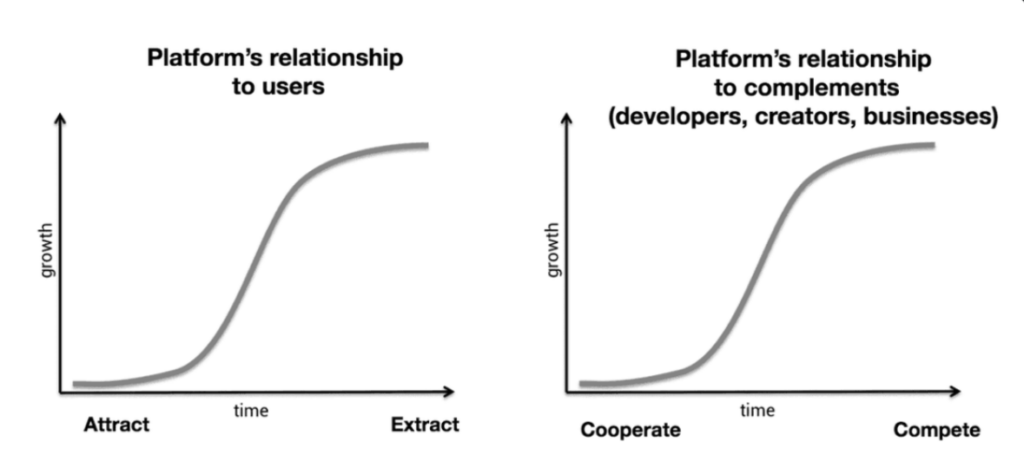
Centralized platforms often follow a similar pattern throughout their development.
At the beginning, companies focus on attracting users, developers, creators and businesses. They invest heavily in improving the platform, encouraging participation and creating an environment where everyone benefits.
This early stage creates a positive relationship between the platform and its participants. More users attract more creators, more creators attract more users, and the network becomes increasingly valuable.
This is known as the network effect.
However, as platforms become dominant, the relationship can change. Once a company controls a large enough ecosystem, its priorities may shift. Growth becomes more difficult, competition increases and the platform begins looking for new ways to increase revenue.
At this stage, the relationship between the platform and its users can move from cooperation toward competition.
Companies may begin collecting more user data, increasing fees, changing algorithms or introducing products that compete directly with third-party creators and businesses that helped build the ecosystem.
Many technology conflicts have followed this pattern.
Microsoft’s competition with Netscape, Google’s relationship with companies dependent on search traffic, Facebook’s changing relationship with developers and Apple’s disputes with app creators all demonstrate the challenges that arise when a centralized platform becomes too powerful.
For entrepreneurs, developers and investors, this creates uncertainty. Building a business on top of another company’s platform means accepting that the rules can change at any time.
A creator may spend years building an audience only to discover that algorithm changes reduce visibility. A developer may invest millions into an application only to face new restrictions. A business may depend on a platform that later becomes its competitor.
This uncertainty has become one of the major motivations behind the development of Web3.
Web3 and the Return of Digital Ownership
Web3 introduces a different model where ownership and control are distributed among participants.
Instead of users simply accessing services owned by corporations, Web3 allows users and developers to own parts of the networks they participate in.
This ownership is enabled through blockchain technology and digital tokens.
Tokens represent a new way of organizing digital communities. They can provide economic incentives, governance rights, access privileges or proof of ownership.
There are two major categories of tokens: fungible tokens and non-fungible tokens.
Fungible tokens are interchangeable digital assets. Cryptocurrencies such as Ethereum’s ETH function as examples of fungible tokens because every unit has the same value and can be exchanged equally.
Non-fungible tokens, commonly known as NFTs, represent unique digital assets. Unlike cryptocurrencies, each NFT has individual characteristics and ownership records.
NFTs can represent many different types of digital property, including artwork, music, virtual objects, membership rights, digital certificates, gaming items and access privileges.
The important innovation is that ownership exists independently from a single company’s database.
A digital item stored on a blockchain can be verified and transferred without requiring permission from a centralized platform.
This creates entirely new possibilities for digital economies.
Blockchain Networks: The Foundation of Web3 Ownership
Blockchain technology makes Web3 possible by creating decentralized systems that do not depend on a single organization.
A blockchain can be viewed as a global digital infrastructure maintained by a distributed network of computers. Anyone can participate according to the rules of the protocol, but no individual company controls the entire system.
Ethereum is one of the most important examples of this model.
Unlike traditional software platforms, Ethereum is not owned by a corporation. It operates as a decentralized global computer powered by thousands of independent participants.
The network uses its native cryptocurrency, ETH, to secure the system and coordinate activity. ETH is used to process transactions, interact with applications and support the economic incentives that keep the network running.
This creates a new type of digital environment where applications can operate without relying on centralized intermediaries.
Developers can build decentralized applications, users can interact directly with those applications, and ownership records can exist independently of any single company.
How Users Acquire and Earn Digital Assets
One of the important differences between Web3 and previous internet models is that users can participate economically in the networks they help create.
In traditional platforms, users usually generate value for companies without directly sharing ownership of the platform.
Web3 introduces mechanisms that allow communities to receive ownership through tokens.
Users can acquire tokens by purchasing them, but they can also earn them through participation, contribution or creative activity.
A well-known example is decentralized finance platforms that distribute governance tokens to early users. These token distributions reward participants who helped build network activity and encourage long-term community involvement.
Creators can also generate income through digital ownership models.
Artists, musicians, developers and game designers can sell digital assets directly to global audiences without depending entirely on traditional intermediaries.
The rise of NFT marketplaces demonstrated how digital ownership could create new economic opportunities for creators by allowing them to sell unique digital items and maintain connections with their communities.
Tokens as a New Coordination System
One of the most important ideas behind Web3 is that tokens can align the interests of different participants.
In centralized systems, users, developers and platform owners often have different incentives. A company may prioritize revenue growth, while users may want better services and creators may want greater control.
Tokens create the possibility of shared ownership.
When users own part of a network, they benefit from its success. Developers are encouraged to improve the ecosystem because they can also participate in the value they create. Communities can make decisions collectively through decentralized governance systems.
This creates a new economic model where the growth of the network benefits many participants rather than only the company operating the platform.
The goal is not simply to replace corporations with decentralized systems. Instead, Web3 explores whether digital services can be designed in a way where users, builders and communities share ownership and responsibility.
Web3 Combines the Best Ideas of Previous Internet Generations
Before Web3, users faced a difficult choice.
Web1 offered openness and decentralization but lacked the advanced functionality people expect today.
Web2 provided powerful tools, smooth user experiences and global connectivity but introduced centralized control.
Web3 attempts to combine the strengths of both eras.
It aims to preserve the openness of the early internet while adding modern applications, financial systems and digital ownership models.
The technology is still developing, and many challenges remain. Scalability, usability, regulation and security continue to be important areas of research and improvement.
However, the fundamental idea behind Web3 represents a major shift in how people think about the internet.
Instead of viewing users as consumers of digital platforms, Web3 introduces the possibility of users becoming owners and active participants in the networks they use.
The movement is still in its early stages, but it is creating new experiments in digital ownership, online communities and decentralized economies.
The future of the internet may not simply be about accessing information or using online services. It may be about participating in digital ecosystems where the people who create value also have the opportunity to own a part of it.
Data Is the New Gold, But Who Really Owns It?
In today’s digital economy, data is often described as the new gold. The comparison reflects the enormous value that information has gained in the modern world. Companies, governments, and organizations rely on data to make decisions, develop technologies, improve services, and create new business models. Much like gold once represented wealth and power, data has become one of the most valuable resources of the 21st century.
However, unlike traditional assets such as land, buildings, or financial instruments, data exists in a legal grey area. Despite its growing economic importance, the ownership and control of data remain unclear in many legal systems around the world. The fundamental question remains unanswered: who actually owns data?
This question is becoming increasingly important as businesses collect enormous amounts of personal, commercial, and operational information. While companies may store and process data, does that automatically mean they own it? Can individuals claim ownership over information about themselves? Can data be sold, inherited, used as collateral, or seized by authorities?
These questions reveal a major challenge of the digital era: the value of data has grown faster than the laws designed to regulate it.
The Legal Challenge of Treating Data as Property
Traditional property law has historically been developed around physical objects and clearly defined rights. It determines who owns a particular asset, how that asset can be used, whether it can be transferred to another person, and what happens if disputes arise.
For centuries, property law has focused on tangible things such as land, houses, vehicles, and other physical possessions. It also covers certain intangible rights, such as shares or financial claims. However, data does not fit neatly into either category.
Unlike a physical object, data cannot be physically possessed in the traditional sense. A piece of information can exist in multiple places at the same time, be copied infinitely, transferred instantly, and used by multiple parties simultaneously. This creates a fundamental challenge for legal systems based on the idea that ownership requires exclusive control over an identifiable object.
Because of this, data currently does not fully fit within existing property law frameworks. In many jurisdictions, data does not have a legally recognized owner in the same way that physical assets do. As a result, questions about control, access, transfer, and protection become much more complicated.
Without a clear legal classification, data cannot always function as a traditional property asset. It cannot easily be used as collateral for financial agreements, inherited like other valuable possessions, or subjected to traditional forms of legal enforcement.
The Rise of “De Facto Ownership” of Data
Although the law may not formally recognize ownership of data, in practice, someone usually controls it. This has created a situation often described by legal experts as “de facto ownership.”
In simple terms, the organization or individual that possesses and manages data often becomes the practical controller of that information. A technology company storing user data, a hospital managing medical records, or a business collecting customer information may effectively determine how that data is used.
However, possession does not necessarily mean legitimate ownership.
The party holding the data may not always be the one with the strongest moral or legal claim to it. For example, a company may collect large amounts of consumer information, but the data itself may originate from millions of individuals whose actions, preferences, and identities created that information.
This creates a situation where control often depends on who collected the data first or who has the strongest technological infrastructure to store and process it. In practice, this can resemble a “first come, first served” approach rather than a carefully balanced legal system.
The result is an environment where powerful organizations with advanced data capabilities may gain significant influence simply because they have the resources to collect and manage information at scale.
Contracts as a Temporary Solution
Because property law does not provide a complete answer, businesses have increasingly turned to contracts to define their relationships with data.
Companies often include clauses stating who can use certain datasets, who has access rights, and what happens when a business relationship ends. Terms such as “data ownership” and “data owner” are frequently used in commercial agreements, even though these concepts do not always correspond to formal property rights.
Contracts provide an important practical solution. They allow businesses to establish rules and expectations between parties. For example, a company working with a technology provider can specify how collected information may be stored, processed, and shared.
However, contractual agreements also have significant limitations.
One major issue is that contracts generally only bind the parties who sign them. If a third party becomes involved — such as creditors, buyers, regulators, or administrators during bankruptcy proceedings — contractual agreements may not provide sufficient protection.
Another problem is that contractual rights are usually weaker than traditional ownership rights. A person who has a contractual right to receive data may not have the same legal protection as someone who owns a recognized asset. This difference becomes particularly important when disputes arise or when organizations face financial difficulties.
Therefore, while contracts can temporarily manage some aspects of data relationships, they do not completely solve the deeper question of legal ownership.
Why Property Law Struggles With Digital Information
To understand whether property law could eventually apply to data, it is necessary to examine the basic principles behind property rights.
Property law depends on a connection between a right and a clearly identifiable object. Ownership exists because there is something specific that can be owned. A person can own a house, a car, or a piece of land because these objects are separate, identifiable, and distinguishable from everything else.
Data creates a much more complicated situation.
A dataset can be copied, modified, combined with other datasets, and distributed across multiple systems. A single piece of information may exist in countless locations simultaneously. Determining where one dataset begins and another ends is often extremely difficult.
For property law to apply effectively, the object being owned must have a certain level of independence and identification. Just as someone can own an entire table but not a single table leg separated from the object’s intended function, the law needs a clearly defined object before it can establish ownership rights.
The challenge for data is determining whether digital information can be separated and identified in a way that allows it to become a traditional object of property rights.
This question requires cooperation between legal experts, technology specialists, and data scientists. The solution may not come from law alone but from developing new technical methods for identifying, structuring, and managing digital information.
What Property Law Could Offer the Data Economy
Despite these challenges, property law could provide significant advantages if adapted to the digital world.
One of the greatest strengths of property law is that it offers a structured and comprehensive system of rules. Instead of creating separate regulations for every possible data-related situation, property law provides fundamental principles that can apply across many circumstances.
If data could become recognized as an object of property rights, many currently unresolved issues could receive clearer answers. Ownership, transfer, inheritance, security rights, and legal enforcement could all become easier to manage.
For businesses, this could create greater certainty. Companies investing heavily in collecting and analyzing data would have clearer protection regarding their assets. Financial institutions could potentially recognize data as collateral, allowing organizations to use their information resources in new ways.
For individuals, stronger legal frameworks could provide greater control over personal information and clarify their rights regarding how their data is collected and used.
Data Ownership and the Future of Digital Rights
The debate over data ownership is not simply a technical or legal issue. It reflects a much larger question about power and value in the digital economy.
As data becomes increasingly central to artificial intelligence, automation, and economic decision-making, determining who controls information will become one of the defining challenges of the coming decades.
The current situation — where data has enormous economic value but uncertain legal status — cannot continue indefinitely. Businesses need predictable rules, individuals need stronger protections, and governments need effective frameworks to manage digital resources responsibly.
However, creating a legal system for data ownership will require careful consideration. Simply applying traditional property concepts to digital information may not be enough. Data behaves differently from physical assets, and any future framework must recognize its unique characteristics.
The goal should not only be to assign ownership but also to create a balanced system that protects innovation, encourages responsible data use, and respects individual rights.
The Future: From Data Control to Data Stewardship
The future of data regulation may ultimately move beyond the simple idea of ownership. Instead of asking only “who owns data?”, society may need to ask “who is responsible for managing data?”
Data stewardship could become a more appropriate concept for the digital age. It recognizes that information is not merely an object to possess but a resource that carries responsibilities.
Organizations that collect and use data may need to demonstrate not only that they have access to information but that they handle it ethically, transparently, and securely.
As the data economy continues to expand, the legal systems surrounding it will need to evolve. The challenge is to build a framework that acknowledges the extraordinary value of data while ensuring that this value is created and shared fairly.
Data may indeed be the new gold — but unlike gold, it is created by people, shaped by interactions, and connected to human identity. The question of ownership is only the beginning. The larger challenge is deciding how this powerful resource should be managed in the digital future.

21 Real-World Blockchain Applications: How Blockchain Is Transforming Industries Beyond Cryptocurrency
When most people hear the word blockchain, they immediately think about Bitcoin, cryptocurrencies, or digital assets. While cryptocurrency was the first major application of blockchain technology, it represents only a small part of what this technology can achieve.
Blockchain has evolved into a powerful digital infrastructure capable of changing the way organizations store information, exchange value, verify transactions, and build trust. Its ability to create transparent, secure, and tamper-resistant records makes it valuable across industries ranging from finance and healthcare to logistics, government, entertainment, and cybersecurity.
The fundamental idea behind blockchain is simple: instead of relying on a single organization to maintain records, multiple participants can share a synchronized digital ledger. Every transaction is recorded, verified, and protected through cryptographic mechanisms. This creates a reliable source of truth that reduces fraud, improves accountability, and allows businesses to automate complex processes.
As organizations continue to explore blockchain technology, real-world applications are expanding rapidly. Below are some of the most important ways blockchain is already changing the way businesses and institutions operate.
Blockchain in Finance: Creating Faster and More Transparent Financial Systems
The financial sector has been one of the earliest adopters of blockchain technology. Traditional financial systems often rely on multiple intermediaries to process transactions, especially when money moves across borders. These processes can be slow, expensive, and vulnerable to errors.
Blockchain offers a new approach by allowing financial institutions to exchange information and settle transactions through shared digital networks. Instead of depending on multiple databases maintained by different organizations, participants can access a common and verified record.
One of the most important applications is cross-border payments. International transfers traditionally require several banks and payment providers, creating delays and additional fees. Blockchain-based systems can simplify this process by enabling near real-time settlement.
Large financial institutions are actively experimenting with blockchain solutions. For example, JPMorgan Chase has developed its blockchain initiative, Onyx, which focuses on improving payment processing, digital asset transactions, and financial infrastructure for institutional clients.
The potential of blockchain in finance extends beyond payments. The technology is also being used for asset tokenization, where traditional assets such as bonds, real estate, or financial instruments are represented digitally on blockchain networks. This could make investment markets more accessible and efficient.
Blockchain Payments and Digital Currency Solutions
The growth of blockchain-based payment platforms has created new possibilities for individuals and businesses.
Companies such as Block and Cash App have integrated Bitcoin and blockchain technologies into their financial services. These platforms allow users to buy, sell, and transfer digital currencies while exploring faster payment methods through technologies such as the Lightning Network.
The development of stablecoins has also become an important part of blockchain finance. Unlike traditional cryptocurrencies with high price volatility, stablecoins are designed to maintain a stable value by being linked to traditional currencies such as the US dollar or euro.
Companies like Circle have created regulated stablecoin infrastructure that allows businesses to process digital payments, conduct international transactions, and build blockchain-based financial applications.
These developments demonstrate how blockchain is creating a bridge between traditional finance and the emerging digital economy.
Blockchain Smart Contracts: Automating Agreements Without Intermediaries
One of blockchain’s most transformative applications is the smart contract.
Traditional contracts usually require lawyers, banks, government agencies, or other intermediaries to verify agreements and enforce obligations. Smart contracts replace much of this manual process with automated code stored on a blockchain.
A smart contract automatically executes actions when predefined conditions are met. For example, an insurance payment could be automatically released after a verified event occurs, or a digital asset could automatically transfer ownership after payment confirmation.
This automation reduces costs, increases transparency, and minimizes disputes between parties.
Smart contracts are becoming increasingly popular in industries such as real estate, healthcare, finance, and government services because they provide a faster and more reliable way to manage agreements.
Platforms such as Ethereum and DFINITY’s Internet Computer allow developers to build decentralized applications powered by smart contracts. These systems support everything from financial services to decentralized social networks.
Blockchain and Cloud Infrastructure: Building Decentralized Applications
As blockchain adoption grows, businesses need reliable infrastructure to develop and operate blockchain applications.
Companies such as Google have introduced blockchain-focused cloud services that simplify the management of blockchain networks. These solutions allow organizations to deploy blockchain nodes, manage transactions, and develop smart contracts without building complex infrastructure from the beginning.
The combination of blockchain and cloud computing is making decentralized applications more accessible for businesses that previously lacked the technical resources to use blockchain technology.
This evolution is helping blockchain move from experimental projects into practical enterprise solutions.
Blockchain and the Internet of Things (IoT): Creating Safer Connected Devices
The Internet of Things is connecting billions of devices around the world, from smart homes and industrial equipment to agricultural sensors and transportation systems.
However, the rapid growth of connected devices creates serious security challenges. Every connected device represents a potential entry point for cyberattacks.
Blockchain can improve IoT security by creating decentralized systems where devices can securely communicate, verify identities, and exchange data without relying on a single vulnerable point.
Companies such as Xage Security use blockchain-based identity management to protect industrial systems, critical infrastructure, and connected devices from unauthorized access.
The technology helps organizations control permissions, verify device identities, and create more resilient digital environments.
Blockchain-Powered Wireless Networks and Smart Cities
Blockchain is also being used to create decentralized wireless networks.
Helium is one example of a blockchain-powered network that replaces traditional telecommunications infrastructure with decentralized hotspots. Participants provide network coverage and receive cryptocurrency rewards for supporting the ecosystem.
This model demonstrates how blockchain can create new economic systems where individuals contribute resources and receive compensation directly.
Applications include asset tracking, smart agriculture, logistics monitoring, and smart city infrastructure.
Blockchain Security: Protecting Digital Identity and Preventing Fraud
Cybersecurity has become one of the biggest challenges of the digital age. Identity theft, fraudulent transactions, and unauthorized access to personal information continue to affect individuals and organizations worldwide.
Blockchain offers a new approach to digital security by creating permanent and verifiable records.
Instead of storing sensitive information in centralized databases that can become targets for hackers, blockchain can distribute and protect identity information through cryptographic systems.
Companies such as CertiK focus on blockchain security by analyzing smart contracts, identifying vulnerabilities, and monitoring digital asset ecosystems.
IBM also uses blockchain technology to help organizations create secure transaction records and manage enterprise blockchain networks through platforms based on Hyperledger Fabric.
Blockchain in Healthcare: Improving Data Security and Patient Control
Healthcare generates enormous amounts of sensitive information, including medical records, genetic data, and treatment histories.
However, healthcare data is often fragmented across different organizations, making information sharing difficult and creating privacy risks.
Blockchain can help solve these challenges by creating secure systems where medical information can be shared between authorized participants while maintaining patient privacy.
Companies such as BurstIQ use blockchain combined with artificial intelligence to manage healthcare data securely while supporting compliance requirements.
Another example is Nebula Genomics, which uses blockchain technology to give individuals greater control over their genetic information. The platform allows users to manage access to their genomic data and participate in research opportunities while maintaining ownership over their information.
Blockchain in Logistics and Supply Chain Management
Supply chains involve many participants, including manufacturers, suppliers, transportation companies, and retailers. Because information is often stored across separate systems, tracking products can become complicated and inefficient.
Blockchain creates a shared digital record that allows all authorized participants to view the same information.
This improves transparency, reduces fraud, and makes it easier to verify product origins.
In industries such as pharmaceuticals and food production, blockchain can track products from their source to the final customer, helping prevent counterfeit goods and improving safety.
Oracle has developed blockchain-based supply chain solutions that allow companies to monitor products, track shipments, and verify information throughout the entire logistics process.
DHL also uses blockchain technology to improve shipment tracking, verify product authenticity, and digitize trade documentation.
Blockchain and NFTs: Creating Digital Ownership
Non-fungible tokens, commonly known as NFTs, became one of the most visible blockchain applications in recent years.
NFTs allow digital items such as artwork, music, videos, and collectibles to have unique ownership records stored on blockchain networks.
Before blockchain, digital files could easily be copied without a reliable way to prove ownership. NFTs introduced a system where digital assets could have verifiable histories and ownership records.
Companies such as Dapper Labs have developed blockchain-based platforms for digital collectibles, including sports-related assets and entertainment memorabilia.
OpenSea became one of the largest NFT marketplaces, allowing users to create, buy, and sell blockchain-based digital assets.
Although the NFT market has experienced significant changes, the underlying concept of digital ownership continues to influence industries such as gaming, entertainment, and intellectual property.
Blockchain in Government: Increasing Transparency and Efficiency
Governments around the world are exploring blockchain as a way to improve public services.
Many government processes involve large amounts of paperwork, verification procedures, and administrative costs. Blockchain can simplify these systems by creating transparent and secure digital records.
Potential applications include identity management, public documents, voting systems, and government transactions.
Blockchain-based voting systems have attracted attention because they could provide secure digital voting methods with transparent audit trails.
Companies such as Follow My Vote and Voatz have developed blockchain voting platforms designed to improve election security and accessibility.
While large-scale blockchain voting remains a topic of debate, the technology demonstrates how blockchain could transform public administration.
Blockchain in Media and Copyright Protection
The digital media industry faces ongoing challenges related to copyright protection, piracy, and fair compensation for creators.
Blockchain can help creators prove ownership of digital content and automate royalty payments.
Because blockchain creates permanent records, artists, photographers, musicians, and publishers can establish proof of creation and ownership.
Companies such as Pixsy use blockchain-based copyright registration technology to help photographers and creators protect their work online.
The technology could create more transparent relationships between creators, platforms, and consumers by ensuring that intellectual property rights are easier to verify and enforce.
The Future of Blockchain Applications
Blockchain technology has moved far beyond its original connection with Bitcoin. Today, it is becoming an important foundation for digital transformation across multiple industries.
Its ability to create trust, transparency, automation, and secure data exchange makes it valuable for organizations facing increasingly complex digital challenges.
From financial services and healthcare to supply chains, government systems, and entertainment, blockchain is changing how businesses operate and how people interact with digital information.
However, blockchain is not a solution for every problem. Successful implementation requires careful planning, appropriate regulation, strong security practices, and a clear understanding of where decentralization creates real value.
The future of blockchain will likely not be defined by one single application but by thousands of practical solutions that quietly improve the systems people use every day.
Blockchain may have started as the technology behind cryptocurrency, but its long-term impact could be much broader: creating a more transparent, connected, and trustworthy digital world.

The Rise of the Data Economy: How Information Became the Defining Resource of the 21st Century
At the dawn of the digital age, few could fully grasp just how profoundly data would reshape the global economy. When Tim Berners-Lee described data as the “new raw material of the 21st century” in 2011, he captured more than a trend — he articulated a transformation already underway. Economies that had long depended on physical resources and industrial production were steadily shifting toward something less tangible but far more powerful: information, insight, and intelligence.
Over the years that followed, this transformation accelerated at a pace that few traditional economic models could explain. Data did not behave like other commodities. It did not follow the familiar rules of scarcity or depletion. Instead, it became more valuable as it grew more abundant, challenging long-standing assumptions about how resources generate economic value. What emerged was not simply a new market, but an entirely new economic paradigm — one in which data sits at the center of innovation, competition, and growth.
From Industrial Assets to Informational Power
For most of modern history, economic strength was measured by access to physical resources: land, labor, machinery, and raw materials. Industries were built around extraction, production, and distribution. Value was created through scale and efficiency. But the rise of digital technologies has fundamentally altered this equation.
Today, the most valuable companies in the world are not defined by the factories they own or the goods they produce, but by the data they collect and the insights they generate. Information has become the foundation upon which decisions are made, strategies are formed, and products are developed. Businesses are no longer just producers of goods and services; they are collectors, processors, and interpreters of data.
This shift has redefined what it means to be competitive. Companies that can effectively harness data are able to anticipate customer needs, optimize operations, and innovate faster than their rivals. Those that cannot risk being left behind, regardless of their size or legacy. The balance of power has tilted toward those who understand not just how to gather information, but how to transform it into meaningful action.
The Paradox of Abundance and Value
One of the most intriguing aspects of the data economy is the relationship between abundance and value. In traditional markets, scarcity drives worth. Precious metals, rare minerals, and limited resources command high prices precisely because they are difficult to obtain. Data, however, operates according to a different logic.
The digital world produces data at an extraordinary rate. Every interaction, transaction, and process generates new streams of information. Rather than diminishing its value, this abundance enhances it. The more data that exists, the more opportunities there are to uncover patterns, draw connections, and generate insights. Value is not derived from scarcity, but from the ability to analyze and interpret vast quantities of information.
This paradox has led to skepticism in some quarters. Critics question how something so intangible can command such high valuations. They worry about the possibility of speculative bubbles driven by overconfidence in data’s potential. Yet for many organizations, the value of data is not theoretical — it is practical and measurable. It influences revenue, efficiency, and long-term growth.
Businesses increasingly recognize that the data they possess can determine whether they identify new opportunities or miss them entirely. It can reveal inefficiencies, highlight emerging markets, and guide strategic decisions with a level of precision that was previously impossible. In this sense, data is not just an asset; it is a form of intelligence that shapes the future direction of a company.
Data as a Tradable and Strategic Asset
As the importance of data has grown, so too has its role as a tradable asset. Companies are no longer valued solely based on their products or services, but also on the information they hold. In many cases, acquisitions are driven by the desire to gain access to valuable datasets rather than physical assets or infrastructure.
This has given rise to new forms of marketplaces and exchanges where data itself is bought, sold, and monetized. Much like traditional commodity markets, these platforms facilitate the flow of value between organizations. However, unlike commodities such as oil or metals, the worth of data is highly context-dependent. Its value is shaped by how it is used, who uses it, and the insights it enables.
The recognition of data as an asset has also led to changes in how businesses account for it. There is a growing awareness that data should not simply be treated as a byproduct of operations, but as a core component of organizational value. This shift requires new frameworks for measurement, governance, and reporting — frameworks that are still evolving as the data economy matures.
The Growing Importance of Governance and Regulation
As data becomes more central to economic activity, the need for oversight and regulation has intensified. Just as financial systems rely on standards and controls to ensure transparency and stability, the data economy requires its own structures of governance.
The introduction of comprehensive data protection regulations has marked a significant milestone in this evolution. The European Union’s General Data Protection Regulation, which came into force in 2018, established a new benchmark for how personal data is handled. It introduced clear rules regarding data usage, portability, and consent, while giving individuals greater control over their information.
This regulatory shift reflects a broader recognition that data is not just an economic resource, but also a matter of personal rights and societal trust. Organizations must balance the pursuit of value with the responsibility to protect privacy and ensure ethical use. Compliance is no longer simply a legal requirement; it is a critical component of maintaining credibility and trust in a data-driven world.
Importantly, regulation also signals the maturity of the data economy. It demonstrates that data has reached a level of significance comparable to other key assets, warranting structured oversight and standardized practices. While compliance can be complex, it also provides a framework within which businesses can operate confidently and responsibly.
Technology as the Engine of the Data Economy
The rapid growth of the data economy would not have been possible without advances in technology. Cloud computing, in particular, has played a transformative role. By enabling organizations to store, process, and analyze vast amounts of data at scale, cloud platforms have removed many of the barriers that once limited data utilization.
The ability to connect systems, integrate data sources, and access information in real time has fundamentally changed how businesses operate. Data that was once siloed within departments or systems can now be brought together to provide a holistic view of operations. This interconnectedness enhances both efficiency and insight, allowing organizations to respond more quickly to changing conditions.
At the same time, technologies such as artificial intelligence and machine learning have amplified the value of data. These tools can process information at speeds and levels of complexity far beyond human capability. They enable automation, prediction, and optimization on a scale that was previously unimaginable. As a result, the combination of data and advanced technology has become one of the most powerful drivers of modern innovation.
Turning Regulation into Opportunity
While regulatory frameworks are often perceived as obstacles, they also present opportunities for forward-thinking organizations. By establishing clear standards for data management, they create a foundation for more efficient and scalable operations.
Companies that take a proactive approach to data governance can gain a competitive advantage. By understanding how data flows through their systems, they can identify inefficiencies, reduce risks, and improve decision-making. Compliance, in this context, becomes more than a requirement — it becomes a catalyst for transformation.
Looking ahead, it is clear that regulation will continue to evolve. As data becomes more integral to economic and social systems, new challenges will emerge, requiring new solutions. Organizations that invest in robust data strategies today will be better positioned to adapt to these changes and thrive in an increasingly complex environment.
The Future of the Data Economy
The rise of the data economy represents one of the most significant shifts in modern history. It has redefined how value is created, how businesses compete, and how societies function. Yet this transformation is still ongoing.
As data continues to grow in volume and importance, the challenges associated with it will become more pronounced. Questions around ownership, access, and ethics will require careful consideration. At the same time, the opportunities for innovation will expand, driven by new technologies and new ways of thinking about data.
Ultimately, the data economy is not just about information — it is about the ability to turn information into insight, and insight into action. It is about understanding the world in new ways and using that understanding to create value.
The organizations that succeed in this environment will be those that recognize the true potential of data and invest in the systems, skills, and strategies needed to harness it. They will not simply collect data; they will use it intelligently, responsibly, and creatively.
In doing so, they will shape not only their own futures, but the future of the global economy itself.
A Complete Guide to the Web3 Stack: The Technology Layers Behind the Decentralized Internet
Understanding the Infrastructure of the New Internet
The internet has undergone several major transformations since its creation. What started as a simple network for sharing information has evolved into a global digital environment where billions of people communicate, work, create, trade and interact every day. However, the architecture behind the internet has changed significantly over time, and each generation of the web has introduced new possibilities as well as new challenges.
The first version of the internet, often called Web1, was primarily focused on accessing information. Users could browse websites and consume content, but they had limited ability to participate. The emergence of Web2 changed everything by introducing social networks, online platforms and user-generated content. People became creators rather than passive consumers, but this transformation also resulted in a new concentration of power. Large technology companies became the main owners of digital infrastructure, user data and online identities.
Web3 represents a different vision for the future of the internet. Instead of relying on centralized companies to control digital services, Web3 aims to create an open, decentralized ecosystem where users can own their data, digital assets and online identities. Blockchain technology, cryptocurrencies, smart contracts and decentralized applications form the foundation of this new model.
However, Web3 is not a single technology or one specific blockchain network. It is an entire technology stack consisting of multiple interconnected layers. Developers building Web3 applications must make decisions about blockchain networks, infrastructure providers, smart contract languages, wallet systems, storage solutions, user interfaces and increasingly artificial intelligence integrations.
Understanding the Web3 stack is essential for anyone who wants to build decentralized applications, invest in blockchain technology or simply understand how the next generation of digital services is being created.
The Evolution From Web1 to Web3: How the Internet Changed
To understand the Web3 stack, it is important to understand the problems it attempts to solve.
The earliest version of the internet, Web1, emerged in the 1990s as an open system designed primarily for publishing and accessing information. Websites were mostly static pages created by organizations and individuals. Users could read articles, browse directories and access digital resources, but interaction was limited.
This period is often described as the “read-only web.” The internet was decentralized in its architecture, but it lacked the interactive tools that define modern online experiences.
The arrival of Web2 in the early 2000s transformed the internet into a social and interactive platform. Companies created services that allowed users to upload content, communicate with others and build online communities. Social media platforms, streaming services, online marketplaces and cloud-based applications became the foundation of everyday digital life.
Web2 solved many problems of the early internet, but it introduced new challenges. Although users create enormous amounts of value through posts, videos, reviews and digital activity, most of the economic benefits and control remain with centralized platforms.
A creator who builds an audience on a social network does not truly own that audience. A gamer who purchases digital items inside an online game may lose access to those assets if the company changes its rules or shuts down the service. Users depend on platforms to protect their identity, store their information and maintain access to their digital lives.
Web3 introduces a different approach: the idea that users should not only participate in digital ecosystems but also own parts of them.
The phrase often used to describe this transition is simple:
Web1 was read-only.
Web2 became read-write.
Web3 aims to become read-write-own.
Ownership is the fundamental concept behind the Web3 movement. Instead of storing digital assets exclusively inside company databases, blockchain technology allows ownership records to exist on decentralized networks. This creates the possibility of digital property that can move between applications and remain controlled by users.
What Is the Web3 Stack?
The Web3 stack is the collection of technologies, protocols and tools required to build applications that operate on blockchain networks.
Traditional software development usually relies on centralized servers, databases and cloud infrastructure. A typical Web2 application might consist of a frontend interface, a backend server, a database and third-party services.
Web3 applications work differently. They replace or supplement traditional infrastructure with decentralized components.
A blockchain network provides the foundation. Smart contracts create programmable logic. Wallets allow users to interact with applications and control their assets. Infrastructure providers connect applications to blockchain data. Decentralized storage solutions handle files and information that cannot efficiently be stored directly on a blockchain.
Together, these components create a complete technology ecosystem that allows developers to build applications without relying entirely on centralized intermediaries.
The Web3 stack continues to evolve rapidly. New blockchain networks appear, developer tools improve, and new categories such as AI-powered blockchain agents are beginning to emerge. As a result, building a Web3 application today requires understanding not only individual technologies but also how these layers work together.
Blockchain Networks: The Foundation of Web3 Applications
Every Web3 application begins with a blockchain network. The blockchain determines how transactions are processed, how data is stored, what programming languages developers can use and what limitations applications may face.
The modern blockchain ecosystem consists of several different types of networks, including Layer 1 blockchains, Layer 2 solutions and modular blockchain systems.
Layer 1 Blockchains: The Core Infrastructure
Layer 1 networks are independent blockchains that maintain their own security mechanisms and consensus systems. They are the fundamental infrastructure on which decentralized applications operate.
Ethereum remains one of the most important Layer 1 networks in the Web3 ecosystem. It introduced programmable smart contracts and became the foundation for decentralized finance, NFTs and thousands of blockchain applications. Ethereum’s biggest strengths are its security, developer community and large amount of capital stored within its ecosystem.
However, Ethereum has historically faced challenges related to transaction speed and fees. As demand increased, developers began creating additional scaling solutions to process transactions more efficiently.
Solana represents another approach. The network focuses on high-speed transactions and low fees, making it attractive for consumer applications, gaming platforms and payment solutions. Its architecture allows it to process a large number of transactions quickly, although it has faced debates around decentralization and network stability.
Bitcoin, the first and most recognized cryptocurrency network, originally focused primarily on secure digital money. However, new developments around Bitcoin Layer 2 solutions and programmable systems are expanding its role beyond simple transactions. Developers are increasingly exploring ways to build applications that use Bitcoin’s security and liquidity.
Other important blockchain networks include Avalanche, Polygon, BNB Chain, Tron, Sui, Aptos and newer specialized platforms designed for specific use cases.
The choice of blockchain depends heavily on what a developer wants to build. Financial applications may prioritize security and liquidity, while gaming platforms may require speed and low transaction costs.
The Rise of Layer 2 Networks and Blockchain Scaling
As blockchain adoption increased, one major challenge became clear: traditional blockchains were not designed to handle global-scale usage without improvements.
Layer 2 networks solve this problem by processing transactions separately while relying on the security of an underlying Layer 1 blockchain.
Instead of every transaction being processed directly on Ethereum, Layer 2 solutions bundle many transactions together and periodically submit information back to Ethereum. This reduces costs and improves scalability while maintaining a connection to the original blockchain.
Networks such as Arbitrum, Base and Optimism have become major players in the Ethereum scaling ecosystem. They allow developers to create applications with lower fees while benefiting from Ethereum’s security model.
Zero-knowledge rollups represent another important direction. Technologies such as zkSync, Starknet and Linea use advanced cryptographic methods to prove transactions without revealing all underlying information. These systems aim to provide faster settlement and improved privacy.
The future of Web3 is increasingly becoming multi-chain. Instead of one blockchain dominating every application category, developers are choosing different networks depending on their specific requirements.
A financial protocol may operate on Ethereum because of liquidity and security. A gaming application may choose Solana because of speed. A consumer payment system may use a low-cost Layer 2 network.
Modern Web3 infrastructure makes this multi-chain future easier by allowing developers to connect applications with many networks through standardized tools.

In Blockchain We Trust? Understanding the Real Meaning of Trust in Blockchain Ecosystems
Trust has always been the foundation of human cooperation. Whether in business relationships, financial transactions, social interactions, or digital communication, people constantly rely on trust to make decisions in situations where uncertainty and risk exist. Every economic system depends on some form of trust — trust in institutions, organizations, technologies, or other individuals.
For centuries, trust has usually been built through intermediaries. Banks protect financial transactions, governments establish legal systems, companies create contractual agreements, and institutions provide verification mechanisms. These structures exist because people often cannot directly verify everything themselves. Instead, they place confidence in organizations that are expected to act responsibly.
The emergence of blockchain technology introduced a revolutionary idea: what if trust could be built into technology itself?
Blockchain was promoted as a system that could reduce dependence on traditional intermediaries and allow people to interact directly with each other without needing to trust a central authority. This vision created one of the most popular narratives surrounding blockchain: “trustless technology.”
However, the reality is far more complex. Blockchain does not eliminate trust. Instead, it transforms the way trust is created, distributed, and maintained. Understanding this difference is essential for understanding both the potential and the limitations of blockchain ecosystems.
The Traditional Role of Trust in Society and Business
Trust is one of the most important foundations of modern society. It allows people and organizations to cooperate despite uncertainty. When individuals enter into agreements, purchase products, transfer money, or share information, they are often exposing themselves to potential risks.
A customer trusts a bank to protect their money. A company trusts a supplier to deliver products on time. A patient trusts a healthcare provider to handle sensitive information responsibly. Without trust, many everyday interactions would become inefficient or impossible.
Researchers have described trust as the willingness to become vulnerable based on confidence that another person, organization, or system will behave in an expected way. Trust reduces uncertainty, lowers transaction costs, encourages collaboration, and allows complex systems to function effectively.
However, as digital technologies have expanded, traditional forms of trust have faced increasing challenges. Online transactions often involve unknown participants separated by geography, different legal systems, and limited personal interaction. In these environments, establishing trust becomes more difficult.
This growing complexity created demand for new mechanisms that could provide reliability without relying exclusively on traditional institutions.
The Blockchain Promise: Trust Without Intermediaries
Blockchain emerged as a response to the limitations of centralized systems. The original Bitcoin white paper published by Satoshi Nakamoto in 2008 proposed a system for electronic transactions that could operate without relying on trusted financial institutions.
Instead of trusting a bank to maintain transaction records, participants could trust the blockchain network itself. Instead of relying on a central authority to verify information, transactions could be validated collectively by network participants through cryptographic mechanisms and consensus algorithms.
This idea led to the popular description of blockchain as a “trust machine.”
The concept was revolutionary because it suggested that technology could replace certain traditional trust relationships. People who did not know each other could exchange value directly because the blockchain would provide a transparent and tamper-resistant record of activity.
In a blockchain network, participants do not necessarily need to trust each other personally. They rely on the rules of the system, the underlying code, cryptography, and the collective verification process.
However, this does not mean that trust disappears completely.
Is Blockchain Really a Trustless Technology?
The phrase “trustless blockchain” is one of the most misunderstood concepts in the technology world.
Blockchain does reduce the need to trust certain intermediaries. A Bitcoin user does not need to trust a bank to process a transaction. A participant in a decentralized application does not need to rely on a single company controlling the database.
But blockchain does not remove trust from the ecosystem. Instead, it shifts trust toward different objects.
Users still need to trust:
- the blockchain protocol itself;
- the developers who create and maintain the technology;
- the applications built on top of the blockchain;
- digital wallets and service providers;
- the security of their devices;
- the economic incentives that keep the network functioning.
The idea that blockchain eliminates trust completely is therefore misleading. The technology changes the location and structure of trust rather than eliminating it.
Blockchain replaces some forms of institutional trust with technological trust, but technology itself still exists within a broader human and social environment.
When Blockchain Trust Fails: Lessons From Crypto Market Crises
The challenges of trusting blockchain ecosystems became particularly visible during major failures in the cryptocurrency industry.
One of the most dramatic examples was the collapse of the Terra ecosystem in 2022. The algorithmic stablecoin TerraUSD (UST), which was designed to maintain a stable value of one US dollar, lost its peg and fell dramatically. Its associated cryptocurrency LUNA also collapsed, causing billions of dollars in losses for investors.
The crisis demonstrated that even systems based on advanced algorithms and decentralized principles still depend on assumptions about economic behavior, incentives, and user confidence.
Another major example was the collapse of cryptocurrency lending platform Celsius. The company suspended withdrawals after facing a liquidity crisis, leaving many customers unable to access their funds. Investigations suggested that the platform had taken significant risks while promising high returns to users.
These events highlighted an important reality: blockchain technology may provide secure transaction infrastructure, but it cannot automatically guarantee responsible management, ethical behavior, or sound economic decisions.
Code can verify transactions, but it cannot replace human judgment.
The Different Layers of Trust in Blockchain Ecosystems
To understand blockchain trust properly, it is necessary to look beyond the technology itself. Trust in blockchain ecosystems exists across several interconnected layers.
Trust in the Blockchain Platform
The first layer involves trust in the blockchain infrastructure itself.
Users must believe that the underlying protocol works correctly, that transactions will be processed accurately, and that the network will remain secure over time.
This trust depends on several factors, including the quality of the code, the strength of cryptographic systems, the reliability of consensus mechanisms, and the activity of the developer community.
For public blockchains such as Bitcoin and Ethereum, trust is also connected to decentralization. The more distributed the network is, the harder it becomes for a single actor to manipulate the system.
However, users often do not personally understand the technical mechanisms behind blockchain. As a result, they still rely on experts, developers, and communities that evaluate and maintain these systems.
Trust in Decentralized Applications and Services
Blockchain infrastructure alone is not enough to create trust for everyday users.
Most people interact with blockchain through applications such as cryptocurrency exchanges, digital wallets, decentralized finance platforms, and Web3 services.
These applications introduce new trust challenges.
A user may trust the blockchain itself but still need to trust the company that created a wallet application or the developers who built a decentralized application.
Smart contracts, for example, are designed to operate automatically without human intervention. However, they are still created by humans and can contain vulnerabilities. A single coding mistake can lead to significant financial losses.
Therefore, trust in blockchain applications depends not only on technology but also on transparency, security practices, reputation, and user experience.
Trust Between Blockchain Participants
Blockchain ecosystems also involve relationships between participants.
Although blockchain allows strangers to interact without traditional intermediaries, participants still evaluate each other’s reliability.
For example, users interacting in decentralized finance markets must consider whether another party is trustworthy. Businesses using blockchain supply chains must assess whether partners provide accurate information.
Blockchain can improve transparency by creating verifiable records, but it does not completely remove questions about human behavior.
A blockchain can prove that information was recorded. It cannot always prove that the original information was truthful.
This distinction is especially important in areas such as supply chain management, healthcare, and identity verification.
The Human Side of Blockchain Trust
One of the biggest misconceptions about blockchain is the belief that technology alone can create trust.
In reality, trust is both technical and social.
A blockchain network may be mathematically secure, but users still need confidence that the technology solves a meaningful problem, that organizations use it responsibly, and that regulations protect participants.
People are more likely to adopt blockchain solutions when they understand how the technology works and when it fits within existing social and institutional systems.
This means blockchain adoption depends not only on innovation but also on education, transparency, regulation, and reputation.
Moving Beyond “In Code We Trust”
Popular blockchain slogans such as “in code we trust” or “in mathematics we trust” capture only part of the picture.
Code is an essential foundation of blockchain security, but it is not the entire trust mechanism.
A truly trusted blockchain ecosystem requires a combination of technical reliability, responsible governance, user confidence, legal frameworks, and ethical practices.
The future of blockchain will depend on building a stronger relationship between technology and society. Instead of replacing human trust completely, blockchain should be understood as a tool that reshapes how trust is created.
The Future of Trust in Blockchain Ecosystems
Blockchain has changed the conversation about trust in the digital world. It has demonstrated that technology can reduce dependence on traditional intermediaries and create new ways for people and organizations to cooperate.
However, blockchain is not a world without trust. It is a world where trust moves from centralized institutions toward networks, protocols, communities, and digital systems.
The challenge for the future is not to eliminate trust but to design better mechanisms for creating and maintaining it.
As blockchain technology continues to develop, successful ecosystems will be those that combine strong technical foundations with transparency, accountability, and human understanding.
Blockchain may not create a completely trustless world. Instead, it offers something more realistic and perhaps more valuable: a new model of trust built through a combination of mathematics, technology, and human cooperation.
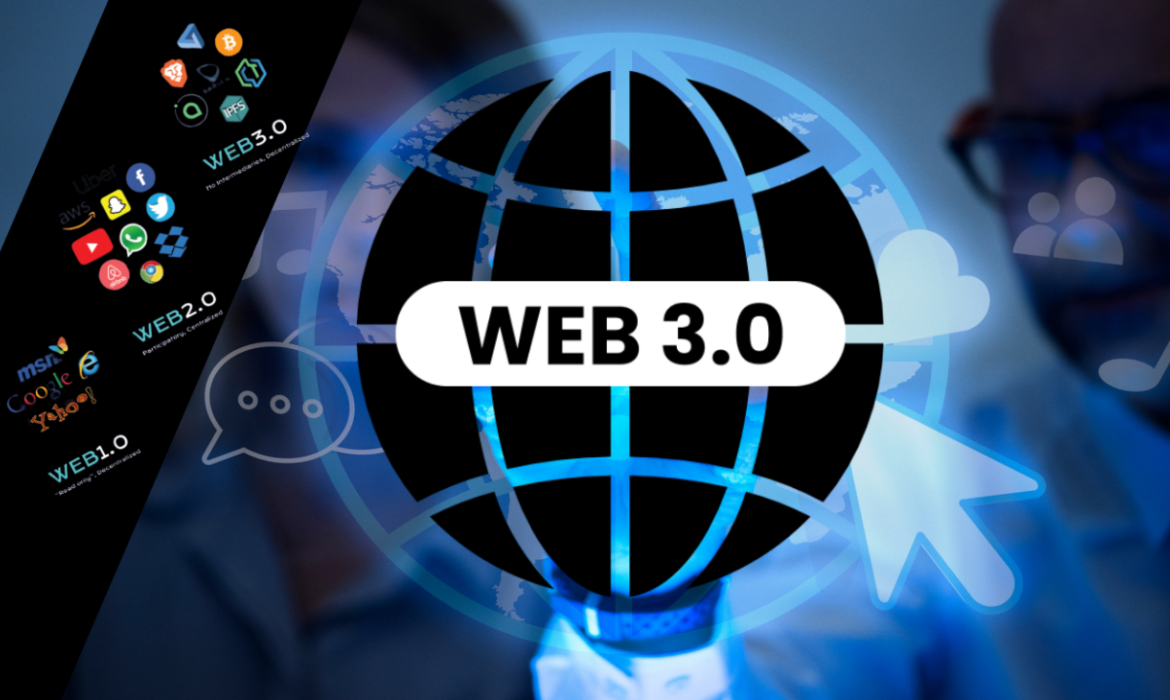
Introduction to Web3: The Future of a Decentralized Internet
For more than three decades, the internet has transformed the way people communicate, work, create, and exchange value. What started as a simple system for sharing information has evolved into a global digital environment where billions of people interact every day. However, the internet that dominates modern life is largely controlled by a relatively small number of powerful technology companies that manage platforms, store user data, and define the rules of participation.
Web3 represents a new vision for the internet — one built around decentralization, digital ownership, transparency, and user empowerment. Instead of allowing a limited number of corporations to control online experiences, Web3 aims to create an ecosystem where users can participate directly, own their digital assets, control their identities, and contribute to the networks they use.
The concept of Web3 is closely connected with blockchain technology, cryptocurrencies, smart contracts, and decentralized applications. Supporters believe it could fundamentally change how people interact online by shifting power away from centralized platforms and returning control to individuals.
To understand why Web3 has become such an important movement, it is necessary to look at how the internet has evolved and why a new model became necessary.
The Evolution of the Internet: From Web1 to Web3
The internet has not always functioned the way people experience it today. Its development can be divided into several major stages: Web1, Web2, and the emerging Web3 era.
Each stage represents a different relationship between users, information, and digital platforms.
Web1: The Read-Only Internet
The first version of the internet, commonly known as Web1, emerged in the early 1990s after the creation of the World Wide Web by British computer scientist Tim Berners-Lee at CERN.
The original idea behind the web was based on openness and decentralization. Berners-Lee envisioned a global information system where people could freely access knowledge from anywhere in the world.
However, early websites were mostly static pages. Users could visit websites, read information, and navigate between pages, but interaction was extremely limited. Most people were consumers of content rather than creators.
Companies, organizations, and institutions published information, while ordinary users had little ability to contribute or participate.
Because of this limited interaction, Web1 became known as the “read-only web.”
The architecture of this period was relatively simple. Websites were hosted on individual servers, and users connected to them through browsers. There were no large social platforms, recommendation algorithms, or digital marketplaces controlling user activity.
Although Web1 introduced the world to online information sharing, it lacked the interactive features that would later define the modern internet.
Web2: The Interactive and Social Internet
The second phase of the internet, Web2, began around the mid-2000s with the rise of social media, online communities, and user-generated content platforms.
Unlike Web1, where users mainly consumed information, Web2 allowed people to create, share, and interact with content.
Platforms such as social networks, video-sharing websites, online marketplaces, and blogging services transformed the internet into a participatory environment.
People could publish articles, upload videos, communicate instantly, build communities, and develop online businesses.
This shift created enormous opportunities. Millions of people gained access to global audiences, and businesses discovered new ways to reach customers.
However, Web2 also introduced a new challenge: centralization.
Although users created much of the value on these platforms, ownership and control remained primarily in the hands of the companies operating them.
Technology giants began collecting enormous amounts of user data, controlling algorithms, managing digital identities, and deciding how content was distributed.
Users could create content, but they usually did not own the platforms, the data generated through their activities, or the economic value created from their participation.
For example, a creator building an audience on a social network depends on the platform’s rules. If the company changes its algorithm, restricts visibility, suspends an account, or changes monetization policies, the creator may lose access to years of accumulated work.
This imbalance between users and platforms became one of the main reasons behind the development of Web3.
Web3: The Read-Write-Own Internet
The term Web3 describes a vision of a new internet where users not only consume and create content but also own parts of the digital systems they participate in.
The idea of Web3 was popularized by Ethereum co-founder Gavin Wood after the launch of Ethereum in 2015. He argued that modern internet systems required users to place too much trust in centralized companies.
Web3 attempts to solve this problem by replacing centralized control with decentralized networks powered by blockchain technology.
Instead of relying on large companies to manage information, transactions, and digital ownership, Web3 uses distributed systems where control is shared among network participants.
The fundamental idea can be summarized as:
Web1 allowed users to read information.
Web2 allowed users to read and write information.
Web3 allows users to read, write, and own digital assets.
This concept introduces a completely different relationship between individuals and the internet.
The Core Principles of Web3
Although Web3 is still developing and does not have one universally accepted definition, several key principles define its philosophy.
Decentralization: Moving Away From Corporate Control
One of the most important ideas behind Web3 is decentralization.
Traditional internet platforms usually operate through centralized servers controlled by a single company. This means one organization manages user accounts, data storage, rules, and access.
Web3 applications are designed differently. They operate on blockchain networks where information is distributed across many computers rather than stored in one central location.
This structure reduces dependence on intermediaries and gives users greater control over digital systems.
Instead of asking permission from a company to participate, users can interact directly with decentralized networks.
Digital Ownership and Control of Assets
One of Web3’s biggest innovations is the concept of true digital ownership.
In traditional online platforms, users often purchase digital items without actually owning them.
For example, a player might spend money buying virtual items inside an online game. However, those items usually belong to the company operating the game. If the company closes the game or deletes the account, the user may lose everything.
Web3 introduces blockchain-based ownership through technologies such as non-fungible tokens (NFTs).
NFTs provide a way to prove ownership of unique digital assets. Because ownership records exist on blockchain networks, users can potentially transfer, sell, or use their digital assets across different platforms.
This changes the relationship between users and digital products. Instead of simply renting access to online experiences, people can own and control valuable digital objects.
Censorship Resistance and User Freedom
Another important feature of Web3 is resistance to centralized control.
In Web2 environments, platforms have significant authority over what users can publish, what communities can exist, and how information is distributed.
This creates concerns about censorship, platform dependency, and loss of digital identity.
Web3 aims to create systems where users have greater freedom because their data and digital reputation are stored on decentralized networks rather than controlled by a single company.
If someone leaves one application, they may be able to take their digital identity, assets, and reputation with them.
This could create a more open internet where users are not permanently locked into specific platforms.
Decentralized Autonomous Organizations (DAOs)
Web3 introduces new ways for communities to organize and make decisions through decentralized autonomous organizations, commonly known as DAOs.
A DAO is a community-based structure where decisions are coordinated through blockchain-based systems and smart contracts.
Instead of traditional organizations where decisions are made by executives or boards, DAOs allow participants to vote and collectively manage resources.
Members often receive governance tokens that represent voting rights within the organization.
DAOs are still an experimental concept, but they demonstrate a new approach to digital collaboration where communities can collectively own and manage online platforms, projects, and services.
Digital Identity in Web3
Identity management is another area where Web3 aims to create change.
Today, people usually create separate accounts for every online service they use. Social networks, marketplaces, entertainment platforms, and financial services all maintain separate user databases.
This creates several problems. Users must repeatedly provide personal information, manage multiple accounts, and depend on companies to protect their identities.
Web3 introduces the idea of self-sovereign identity, where individuals control their own digital identity.
Blockchain-based identities can allow users to authenticate themselves across multiple applications without relying on centralized platforms.
Instead of companies owning digital identities, individuals can have greater control over how their information is shared and used.
Cryptocurrency and Native Digital Payments
Another defining feature of Web3 is the integration of digital currencies.
Traditional internet payments depend heavily on banks, payment processors, and financial institutions.
Web3 introduces blockchain-based currencies that allow direct peer-to-peer transactions without traditional intermediaries.
Cryptocurrencies can enable global payments, financial applications, and new economic models that operate independently from traditional banking systems.
This is especially significant for people in regions where access to financial services is limited.
The Role of Blockchain Technology in Web3
Blockchain serves as the technological foundation of Web3.
A blockchain is a decentralized digital ledger that records transactions across many computers. Because information is stored across a network and protected through cryptographic mechanisms, blockchain systems can provide transparency, security, and resistance to manipulation.
Smart contracts expand blockchain capabilities by allowing automated agreements and applications to run without traditional intermediaries.
Together, blockchain and smart contracts enable decentralized applications, digital ownership systems, financial platforms, and new forms of online collaboration.
The Challenges Facing Web3
Despite its ambitious vision, Web3 still faces significant challenges before it can achieve widespread adoption.
Accessibility Problems
Many Web3 technologies remain difficult for ordinary users to understand and use.
Managing cryptocurrency wallets, protecting private keys, and interacting with decentralized applications often requires technical knowledge.
High transaction costs on some blockchain networks can also make Web3 services inaccessible to many users.
Developers are working on solutions such as layer-2 networks and improved user interfaces, but accessibility remains a major challenge.
User Experience Limitations
For Web3 to reach mainstream audiences, applications must become much simpler.
Current Web3 systems often require users to understand concepts such as blockchain addresses, gas fees, wallet security, and transaction confirmations.
For many people, this creates unnecessary complexity compared with traditional online services.
Future Web3 platforms will need to provide experiences that are as simple and intuitive as existing Web2 applications.
Education and Understanding
Another major obstacle is education.
Web3 introduces completely new concepts related to ownership, identity, finance, and digital communities.
Many users are unfamiliar with how blockchain technology works or why decentralized systems matter.
Just as early internet adoption required education about browsers, websites, and online communication, Web3 requires broader public understanding.
Dependence on Centralized Infrastructure
Although Web3 aims to reduce centralization, much of today’s Web3 ecosystem still relies on traditional infrastructure.
Many decentralized projects use centralized services for development, communication, cloud hosting, and storage.
Building truly decentralized alternatives requires time, investment, and technological innovation.
The Future of Web3
Web3 is still in its early stages, but its influence continues to grow.
Blockchain technology, decentralized finance, digital identity, artificial intelligence integration, and new forms of online ownership are creating possibilities that were previously impossible.
The transition from Web2 to Web3 will likely not happen overnight. Instead, the future internet may combine elements of both models, creating hybrid systems that balance convenience, security, and user ownership.
The ultimate goal of Web3 is not simply to replace existing platforms but to create a more open, transparent, and user-focused digital environment.
As technology continues to develop, Web3 could redefine how people interact online, how digital value is created, and who controls the future of the internet.

What Is Blockchain? Understanding the Technology Transforming the Digital Economy
Blockchain has become one of the most influential technologies of the digital era, changing the way organizations think about trust, transparency, and the exchange of information. Often associated with cryptocurrencies such as Bitcoin, blockchain is much more than the technology behind digital currencies. It represents a completely new approach to storing, sharing, and verifying data in a world where secure digital transactions are becoming increasingly important.
At its core, blockchain is a decentralized and distributed digital ledger that records transactions across a network of computers. Instead of relying on a single organization or intermediary to maintain records, blockchain allows multiple participants to share access to the same source of information. Every transaction is recorded, verified, and permanently stored, creating a system designed to be transparent, secure, and resistant to manipulation.
This unique structure has made blockchain a powerful tool for industries far beyond finance. From supply chains and healthcare to real estate, government services, and artificial intelligence, organizations are exploring how blockchain can improve efficiency, reduce fraud, and create new forms of digital trust.
The Basic Concept Behind Blockchain Technology
Traditional databases typically rely on a central authority that manages information. A bank, for example, maintains its own records of transactions and acts as a trusted intermediary between customers. While this approach has worked for decades, it also creates dependence on centralized systems that can become targets for fraud, cyberattacks, or operational failures.
Blockchain introduces a different model. Instead of storing information in one central location, data is distributed across a network of computers known as nodes. Every participant in the network can maintain a copy of the ledger, and changes must be verified through a shared agreement process called consensus.
This decentralized approach creates a system where trust does not depend on a single institution. Instead, trust is built into the technology itself through cryptographic security, transparent records, and collective verification.
Each transaction recorded on a blockchain is grouped together with other transactions into a block. Once a block is verified, it is added to the existing chain of previous blocks. This creates a chronological record of activity that is extremely difficult to alter without detection.
The result is a permanent and transparent history of transactions that participants can rely on without requiring a traditional intermediary.
How Blockchain Works: From Transactions to Permanent Records
The process behind blockchain may appear complex, but the basic idea is relatively straightforward. Whenever a transaction takes place, information about that transaction is collected and prepared for recording.
A block contains important details about the transaction, including information about what happened, when it occurred, who participated, and any relevant conditions. Depending on the application, the data may represent financial transfers, ownership records, product movements, medical information, or digital assets.
Each block receives a unique digital identifier known as a cryptographic hash. This hash acts like a fingerprint for the block. It also contains information connected to the previous block, creating a secure link between all blocks in the chain.
Because each block depends on the previous one, changing information in an earlier block would require changing every following block. In a large decentralized network, this would require enormous computational power and would be immediately visible to other participants.
Before a block is added to the blockchain, network participants must validate the transaction through a consensus mechanism. These mechanisms ensure that everyone agrees on the accuracy of the information being recorded.
The two most widely recognized consensus methods are Proof of Work and Proof of Stake. Proof of Work requires participants to solve complex mathematical problems to validate transactions, while Proof of Stake allows participants to validate transactions based on the amount of cryptocurrency or digital assets they hold and are willing to lock as security.
Through this combination of cryptography, decentralization, and consensus, blockchain creates a system where records become secure, transparent, and nearly impossible to manipulate.
The Evolution of Blockchain: From Bitcoin to a Global Technology
Blockchain first gained worldwide attention in 2008 with the introduction of Bitcoin, a decentralized digital currency created by the anonymous developer or group known as Satoshi Nakamoto.
The primary goal of Bitcoin was to enable direct peer-to-peer financial transactions without relying on banks or other centralized authorities. The blockchain acted as a public record of all transactions, solving one of the biggest challenges of digital currencies: preventing the same digital asset from being spent more than once.
For several years, blockchain was closely associated with cryptocurrency. However, developers soon recognized that the technology had much broader potential.
A major turning point came in 2015 with the launch of Ethereum, a blockchain platform that introduced smart contracts. Unlike traditional contracts that require human involvement and legal intermediaries, smart contracts are digital agreements written in code that automatically execute when specific conditions are met.
This innovation transformed blockchain from a technology focused mainly on financial transactions into a platform capable of supporting decentralized applications across multiple industries.
Today, blockchain is used in areas such as financial services, healthcare, logistics, identity management, digital ownership, and decentralized finance. It has also become a foundation for technologies such as non-fungible tokens (NFTs) and Web3 applications.
The future development of blockchain continues to focus on improving scalability, privacy, energy efficiency, and integration with emerging technologies such as artificial intelligence and the Internet of Things.
Why Blockchain Matters: The Key Benefits of Decentralized Technology
The growing interest in blockchain comes from its ability to solve several challenges faced by traditional digital systems.
One of the most important advantages is the creation of trust between parties that may not know or fully trust each other. By providing a shared and verifiable record, blockchain reduces the need for intermediaries and allows organizations to collaborate more efficiently.
Security is another major benefit. Because blockchain records cannot easily be changed after verification, the technology significantly reduces the risk of fraud and unauthorized manipulation. Every participant has access to the same verified information, making hidden changes extremely difficult.
Blockchain also improves transparency. In industries where tracking the origin and movement of products is essential, blockchain provides a complete audit trail. Companies can verify where products came from, how they moved through supply chains, and whether certain standards were followed.
Efficiency is another important advantage. Traditional business processes often require multiple organizations to maintain separate records and repeatedly verify information. Blockchain eliminates much of this duplication by providing a shared database that all authorized participants can access.
Smart contracts further enhance efficiency by automating processes. Instead of waiting for manual approvals, transactions can automatically proceed when predefined conditions are satisfied.
Smart Contracts: Automating Trust in the Digital World
Smart contracts represent one of blockchain’s most powerful innovations. They are self-executing programs stored directly on a blockchain network.
The logic of the agreement is written into computer code. When the required conditions are met, the contract automatically performs the agreed action.
For example, a smart contract could automatically release payment after a delivery is confirmed, transfer ownership of a digital asset after payment is received, or trigger an insurance payout after specific conditions are verified.
By removing unnecessary intermediaries, smart contracts can reduce costs, speed up transactions, and increase transparency. They are becoming increasingly important in industries such as finance, real estate, insurance, and supply chain management.
However, smart contracts also require careful design and security testing. Because they operate automatically, coding errors can create serious vulnerabilities if they are not properly reviewed.
Different Types of Blockchain Networks
Not all blockchains operate in the same way. Different organizations use different blockchain models depending on their needs, security requirements, and level of access control.
Public blockchains are open networks where anyone can participate. Bitcoin and Ethereum are examples of public blockchains. They prioritize decentralization and transparency, but they may face challenges related to transaction speed, privacy, and energy consumption.
Private blockchains operate under the control of a single organization. They allow businesses to use blockchain technology while maintaining greater control over participants and access rights.
Permissioned blockchains restrict participation to approved users. These networks are often used by companies that need both transparency and privacy.
Consortium blockchains are managed by groups of organizations that share responsibility for maintaining the network. They are particularly useful in industries where multiple companies need to collaborate while maintaining shared trust.
Blockchain Platforms and Enterprise Solutions
As blockchain adoption has expanded, various platforms have emerged to help organizations build blockchain-based applications.
Ethereum remains one of the most widely used platforms for decentralized applications and smart contracts. Its flexibility has made it popular among developers creating new digital services.
Hyperledger Fabric, developed under the Linux Foundation, focuses on enterprise applications. It provides a modular framework that allows businesses to create customized blockchain solutions with controlled access and improved privacy.
Corda was designed specifically for business environments where secure and private transactions are essential. It is widely used in sectors such as finance, healthcare, and supply chain management.
Quorum, based on Ethereum technology, provides enterprise-focused blockchain capabilities with enhanced privacy and performance features.
These platforms demonstrate that blockchain is not limited to cryptocurrency but has become an important infrastructure technology for modern businesses.
Blockchain Security: Creating Trust in a Digital Environment
Security is one of blockchain’s strongest advantages, but it does not eliminate all risks. Organizations implementing blockchain solutions must still develop comprehensive security strategies.
Identity management is essential to ensure that only authorized participants can access sensitive information. Strong encryption methods protect data from unauthorized access, while secure authentication systems help verify users.
Smart contracts must be regularly audited because vulnerabilities in their code can create security problems. Organizations must also consider regulatory requirements related to privacy, data protection, and financial compliance.
Continuous monitoring and effective incident response strategies remain necessary even in decentralized environments. Blockchain improves security, but it must be combined with strong cybersecurity practices to provide complete protection.
Blockchain and Bitcoin: Understanding the Difference
Although Bitcoin and blockchain are often mentioned together, they are not the same thing.
Bitcoin is a digital currency that uses blockchain technology as its underlying infrastructure. The blockchain records Bitcoin transactions and ensures that the currency system operates without a central authority.
Blockchain, however, is a much broader technology. It can store many types of information and support a wide range of applications beyond digital currencies.
Bitcoin represents one use case of blockchain, while blockchain itself is a foundational technology that can transform many different industries.
The Connection Between Blockchain and Artificial Intelligence
The combination of blockchain and artificial intelligence is creating new opportunities for businesses and organizations.
AI systems require large amounts of reliable data to function effectively. Blockchain can provide secure and transparent data management, helping organizations verify where information comes from and ensuring that data has not been altered.
In supply chain management, blockchain can track products from origin to delivery, while AI analyzes this information to improve forecasting and logistics.
In healthcare, AI can help analyze medical information and develop personalized treatments, while blockchain protects patient records and ensures secure access.
Together, blockchain and AI can improve trust, automation, and efficiency across many sectors.
The Future of Blockchain Technology
Blockchain has evolved from a niche technology supporting cryptocurrency into a powerful foundation for the digital economy. Its ability to create trust, improve transparency, and automate processes makes it valuable across industries.
While challenges remain, including scalability, regulation, and adoption barriers, blockchain continues to develop rapidly. As businesses increasingly rely on digital systems, the need for secure and transparent ways of managing information will only grow.
The future of blockchain is not only about cryptocurrencies. It is about creating a new digital infrastructure where organizations, individuals, and technologies can interact with greater trust and efficiency.
Blockchain may ultimately become one of the key technologies defining how value, information, and digital ownership are managed in the decades ahead.

Data as the New Oil: A Compelling Metaphor — and Its Hidden Complexity
In the early years of the 21st century, a phrase began to circulate that would come to define an entire era of technological thinking: “Data is the new oil.” Coined by British mathematician Clive Humby, the expression quickly gained traction across industries, from corporate boardrooms to academic circles. It offered a simple, powerful comparison that captured the growing importance of data in a rapidly digitizing world. Like oil in the industrial age, data appeared to be the driving force behind innovation, economic growth, and global power.
At first glance, the metaphor feels almost perfect. Oil transformed societies by fueling machines, enabling mass production, and reshaping geopolitics. In a similar way, data now underpins digital platforms, artificial intelligence, and decision-making systems that influence nearly every aspect of modern life. Yet, as persuasive as this comparison may be, it conceals a deeper, more nuanced reality. Data is not oil — and understanding the differences is just as important as appreciating the similarities.
The Rise of Data as a Strategic Resource
The rapid expansion of the internet, mobile technologies, and connected devices has led to an unprecedented explosion of data. Every click, search query, purchase, and interaction generates digital traces. Over time, these traces accumulate into vast datasets that can be analyzed, interpreted, and leveraged for insight.
Organizations quickly realized that data could provide a powerful competitive advantage. Companies that effectively collect and analyze information about their users are able to personalize experiences, optimize operations, and anticipate future behavior. This capability has fundamentally changed how businesses operate. Decision-making is no longer driven solely by intuition or experience; it is increasingly guided by patterns discovered within data.
Large technology companies have built entire empires on this principle. Their ability to gather, process, and utilize massive volumes of information allows them to refine algorithms, improve services, and maintain dominance in their respective markets. In this sense, the comparison to oil barons of the past is understandable. Just as access to oil once determined industrial power, access to data now shapes influence in the digital economy.
From Raw Data to Valuable Insight
One of the most compelling aspects of the oil metaphor lies in the idea of refinement. Crude oil, in its natural state, has limited usefulness. It must be processed and transformed into fuels, plastics, and other products before it becomes valuable. Data follows a similar trajectory.
Raw data is often chaotic and unstructured. It may contain errors, inconsistencies, and gaps that make it difficult to interpret. On its own, it rarely provides meaningful insight. However, when it is cleaned, organized, and analyzed using advanced tools such as machine learning and statistical modeling, it can reveal patterns that would otherwise remain hidden.
This transformation process is at the heart of modern analytics. Businesses use it to understand customer behavior, governments rely on it to inform policy decisions, and researchers apply it to uncover scientific breakthroughs. The ability to extract value from data has become a defining skill of the digital age, much like refining oil was essential to the industrial era.
Where the Comparison Begins to Break Down
Despite its intuitive appeal, the analogy between data and oil begins to unravel under closer examination. The differences are not minor — they are fundamental, and they reshape how we should think about data as a resource.
Unlike oil, data is not scarce. Oil exists in finite quantities, and its extraction is constrained by geography and physical limits. Once consumed, it cannot be replenished. Data, on the other hand, can be generated endlessly. Every new interaction creates more information, and existing data can be duplicated and shared without being depleted. This lack of scarcity changes the economic dynamics entirely.
Another critical distinction lies in the nature of value. Oil has a relatively stable and intrinsic value. A barrel of oil can be priced and traded on global markets with a high degree of consistency. Data does not behave this way. Its value is highly context-dependent. A dataset that is incredibly valuable to one organization may be completely irrelevant to another. The usefulness of data depends on how it is applied, who is using it, and what problem it is intended to solve.
Ethics also play a far more significant role in the world of data. Extracting oil requires compliance with environmental regulations and legal frameworks, but it does not typically involve questions of personal consent. Data, especially when it relates to individuals, introduces complex issues around privacy, ownership, and control. The collection and use of personal information raise concerns that go beyond economics and enter the realm of human rights.
Furthermore, the process of refining data is far less predictable than refining oil. Oil processing follows established, standardized methods that produce consistent outputs. Data analysis, by contrast, is deeply dependent on context, expertise, and interpretation. The same dataset can lead to different conclusions depending on how it is analyzed. This variability introduces uncertainty and requires a level of critical thinking that has no direct parallel in the oil industry.
Rethinking the Metaphor
As the limitations of the oil comparison become more apparent, alternative ways of understanding data have emerged. Some thinkers suggest that data is more like soil — something that must be cultivated carefully to produce value. Others compare it to water, emphasizing its abundance, flow, and necessity for life in the digital ecosystem. Another perspective treats data as a form of capital, positioning it alongside labor and machinery as a fundamental input in economic production.
Each of these metaphors captures certain aspects of reality more effectively than the oil analogy. They highlight the importance of stewardship, infrastructure, and context. Yet none have achieved the same level of popularity. The original phrase persists, perhaps because it resonates emotionally and intellectually in a way that simpler or more accurate comparisons do not.
The Expanding Role of Data in the Age of AI
The importance of data has only intensified with the rise of artificial intelligence. Modern AI systems rely heavily on large datasets to learn and make decisions. The quality of these systems is directly tied to the quality of the data they are trained on. If the data is biased, incomplete, or unrepresentative, the outcomes will reflect those flaws.
This has significant real-world implications. Decisions influenced by AI now affect areas such as healthcare, employment, finance, and law enforcement. Errors or biases in data can lead to unequal treatment, missed opportunities, or even harm. As a result, the conversation around data is no longer purely technical or economic — it is deeply social and ethical.
At the same time, new approaches to managing data are emerging. Concepts such as decentralized data architectures, privacy-enhancing technologies, and advanced governance frameworks are reshaping how organizations handle information. These innovations aim to balance the need for accessibility and insight with the imperative to protect individual rights.
Data and the New Geopolitics
Beyond business and technology, data has become a key factor in global politics. Nations are increasingly aware that control over data infrastructure and flows can influence economic strength, national security, and international relationships. Policies around data localization, cross-border transfers, and digital sovereignty are becoming central to geopolitical strategy.
In many ways, this mirrors the historical importance of oil in shaping alliances and conflicts. However, the stakes are arguably higher. Data is not just a resource that powers economies; it is also a reflection of human behavior, identity, and interaction. Control over data can mean control over narratives, influence, and even societal structures.
A More Responsible Future
The enduring popularity of the phrase “data is the new oil” speaks to its power as a metaphor. It captures the transformative potential of data and its central role in the modern world. But relying too heavily on this comparison risks oversimplifying a complex reality.
Data is not just a commodity to be extracted and consumed. It is a dynamic, context-sensitive resource that requires careful management, ethical consideration, and thoughtful governance. The way we handle data today will shape not only economic outcomes but also the structure of society itself.
As we move forward, the challenge is not simply to harness the power of data, but to do so responsibly. This means investing in better systems, stronger protections, and more transparent practices. It means recognizing that behind every dataset are real people, with rights and expectations that must be respected.
The metaphor may have started the conversation, but it is no longer enough. Understanding data on its own terms — in all its complexity and potential — is what will define the next chapter of the digital age.