
For more than three decades, the internet has transformed the way people communicate, work, create, and exchange value. What started as a simple system for sharing information has evolved into a global digital environment where billions of people interact every day. However, the internet that dominates modern life is largely controlled by a relatively small number of powerful technology companies that manage platforms, store user data, and define the rules of participation.
Web3 represents a new vision for the internet — one built around decentralization, digital ownership, transparency, and user empowerment. Instead of allowing a limited number of corporations to control online experiences, Web3 aims to create an ecosystem where users can participate directly, own their digital assets, control their identities, and contribute to the networks they use.
The concept of Web3 is closely connected with blockchain technology, cryptocurrencies, smart contracts, and decentralized applications. Supporters believe it could fundamentally change how people interact online by shifting power away from centralized platforms and returning control to individuals.
To understand why Web3 has become such an important movement, it is necessary to look at how the internet has evolved and why a new model became necessary.
The Evolution of the Internet: From Web1 to Web3
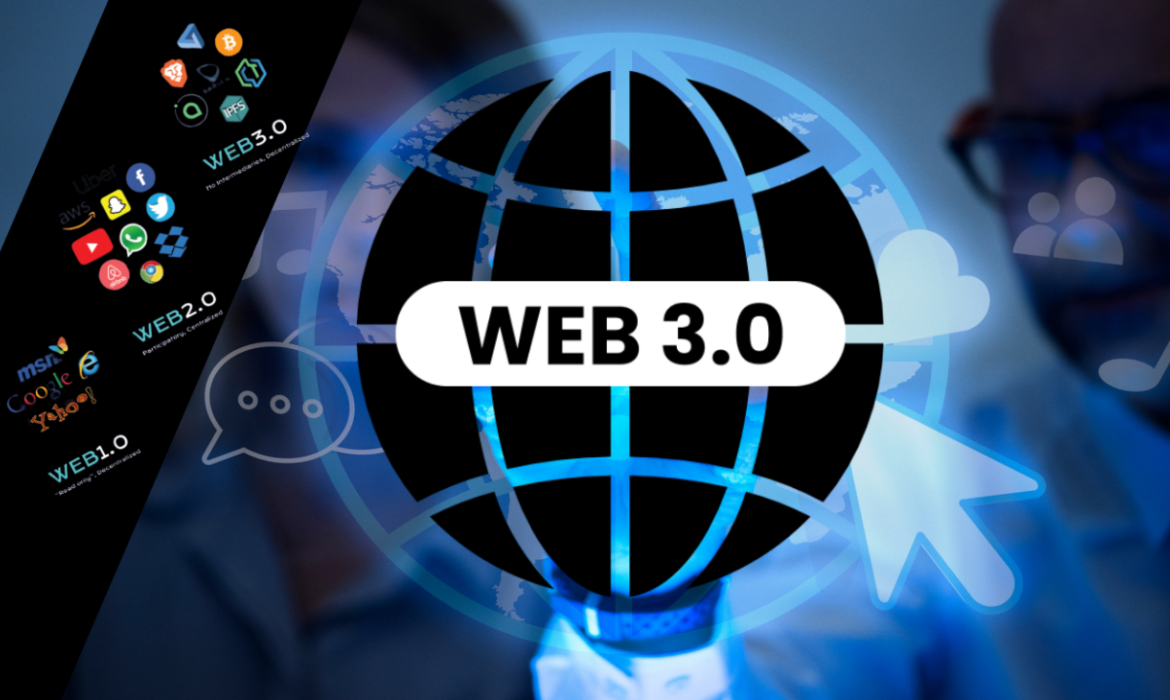
The internet has not always functioned the way people experience it today. Its development can be divided into several major stages: Web1, Web2, and the emerging Web3 era.
Each stage represents a different relationship between users, information, and digital platforms.
Web1: The Read-Only Internet
The first version of the internet, commonly known as Web1, emerged in the early 1990s after the creation of the World Wide Web by British computer scientist Tim Berners-Lee at CERN.
The original idea behind the web was based on openness and decentralization. Berners-Lee envisioned a global information system where people could freely access knowledge from anywhere in the world.
However, early websites were mostly static pages. Users could visit websites, read information, and navigate between pages, but interaction was extremely limited. Most people were consumers of content rather than creators.
Companies, organizations, and institutions published information, while ordinary users had little ability to contribute or participate.
Because of this limited interaction, Web1 became known as the “read-only web.”
The architecture of this period was relatively simple. Websites were hosted on individual servers, and users connected to them through browsers. There were no large social platforms, recommendation algorithms, or digital marketplaces controlling user activity.
Although Web1 introduced the world to online information sharing, it lacked the interactive features that would later define the modern internet.
Web2: The Interactive and Social Internet
The second phase of the internet, Web2, began around the mid-2000s with the rise of social media, online communities, and user-generated content platforms.
Unlike Web1, where users mainly consumed information, Web2 allowed people to create, share, and interact with content.
Platforms such as social networks, video-sharing websites, online marketplaces, and blogging services transformed the internet into a participatory environment.
People could publish articles, upload videos, communicate instantly, build communities, and develop online businesses.
This shift created enormous opportunities. Millions of people gained access to global audiences, and businesses discovered new ways to reach customers.
However, Web2 also introduced a new challenge: centralization.
Although users created much of the value on these platforms, ownership and control remained primarily in the hands of the companies operating them.
Technology giants began collecting enormous amounts of user data, controlling algorithms, managing digital identities, and deciding how content was distributed.
Users could create content, but they usually did not own the platforms, the data generated through their activities, or the economic value created from their participation.
For example, a creator building an audience on a social network depends on the platform’s rules. If the company changes its algorithm, restricts visibility, suspends an account, or changes monetization policies, the creator may lose access to years of accumulated work.
This imbalance between users and platforms became one of the main reasons behind the development of Web3.
Web3: The Read-Write-Own Internet
The term Web3 describes a vision of a new internet where users not only consume and create content but also own parts of the digital systems they participate in.
The idea of Web3 was popularized by Ethereum co-founder Gavin Wood after the launch of Ethereum in 2015. He argued that modern internet systems required users to place too much trust in centralized companies.
Web3 attempts to solve this problem by replacing centralized control with decentralized networks powered by blockchain technology.
Instead of relying on large companies to manage information, transactions, and digital ownership, Web3 uses distributed systems where control is shared among network participants.
The fundamental idea can be summarized as:
Web1 allowed users to read information.
Web2 allowed users to read and write information.
Web3 allows users to read, write, and own digital assets.
This concept introduces a completely different relationship between individuals and the internet.
The Core Principles of Web3
Although Web3 is still developing and does not have one universally accepted definition, several key principles define its philosophy.
Decentralization: Moving Away From Corporate Control
One of the most important ideas behind Web3 is decentralization.
Traditional internet platforms usually operate through centralized servers controlled by a single company. This means one organization manages user accounts, data storage, rules, and access.
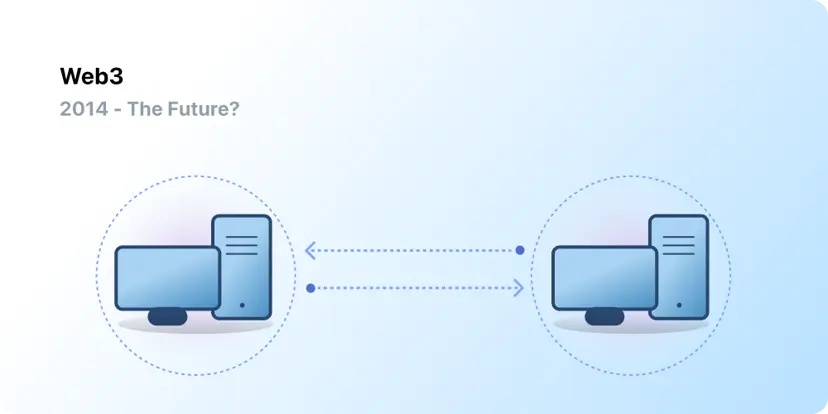
Web3 applications are designed differently. They operate on blockchain networks where information is distributed across many computers rather than stored in one central location.
This structure reduces dependence on intermediaries and gives users greater control over digital systems.
Instead of asking permission from a company to participate, users can interact directly with decentralized networks.
Digital Ownership and Control of Assets
One of Web3’s biggest innovations is the concept of true digital ownership.
In traditional online platforms, users often purchase digital items without actually owning them.
For example, a player might spend money buying virtual items inside an online game. However, those items usually belong to the company operating the game. If the company closes the game or deletes the account, the user may lose everything.
Web3 introduces blockchain-based ownership through technologies such as non-fungible tokens (NFTs).
NFTs provide a way to prove ownership of unique digital assets. Because ownership records exist on blockchain networks, users can potentially transfer, sell, or use their digital assets across different platforms.
This changes the relationship between users and digital products. Instead of simply renting access to online experiences, people can own and control valuable digital objects.
Censorship Resistance and User Freedom
Another important feature of Web3 is resistance to centralized control.
In Web2 environments, platforms have significant authority over what users can publish, what communities can exist, and how information is distributed.
This creates concerns about censorship, platform dependency, and loss of digital identity.
Web3 aims to create systems where users have greater freedom because their data and digital reputation are stored on decentralized networks rather than controlled by a single company.
If someone leaves one application, they may be able to take their digital identity, assets, and reputation with them.
This could create a more open internet where users are not permanently locked into specific platforms.
Decentralized Autonomous Organizations (DAOs)
Web3 introduces new ways for communities to organize and make decisions through decentralized autonomous organizations, commonly known as DAOs.
A DAO is a community-based structure where decisions are coordinated through blockchain-based systems and smart contracts.
Instead of traditional organizations where decisions are made by executives or boards, DAOs allow participants to vote and collectively manage resources.
Members often receive governance tokens that represent voting rights within the organization.
DAOs are still an experimental concept, but they demonstrate a new approach to digital collaboration where communities can collectively own and manage online platforms, projects, and services.
Digital Identity in Web3
Identity management is another area where Web3 aims to create change.
Today, people usually create separate accounts for every online service they use. Social networks, marketplaces, entertainment platforms, and financial services all maintain separate user databases.
This creates several problems. Users must repeatedly provide personal information, manage multiple accounts, and depend on companies to protect their identities.
Web3 introduces the idea of self-sovereign identity, where individuals control their own digital identity.
Blockchain-based identities can allow users to authenticate themselves across multiple applications without relying on centralized platforms.
Instead of companies owning digital identities, individuals can have greater control over how their information is shared and used.
Cryptocurrency and Native Digital Payments
Another defining feature of Web3 is the integration of digital currencies.
Traditional internet payments depend heavily on banks, payment processors, and financial institutions.
Web3 introduces blockchain-based currencies that allow direct peer-to-peer transactions without traditional intermediaries.
Cryptocurrencies can enable global payments, financial applications, and new economic models that operate independently from traditional banking systems.
This is especially significant for people in regions where access to financial services is limited.
The Role of Blockchain Technology in Web3
Blockchain serves as the technological foundation of Web3.
A blockchain is a decentralized digital ledger that records transactions across many computers. Because information is stored across a network and protected through cryptographic mechanisms, blockchain systems can provide transparency, security, and resistance to manipulation.
Smart contracts expand blockchain capabilities by allowing automated agreements and applications to run without traditional intermediaries.
Together, blockchain and smart contracts enable decentralized applications, digital ownership systems, financial platforms, and new forms of online collaboration.
The Challenges Facing Web3
Despite its ambitious vision, Web3 still faces significant challenges before it can achieve widespread adoption.
Accessibility Problems
Many Web3 technologies remain difficult for ordinary users to understand and use.
Managing cryptocurrency wallets, protecting private keys, and interacting with decentralized applications often requires technical knowledge.
High transaction costs on some blockchain networks can also make Web3 services inaccessible to many users.
Developers are working on solutions such as layer-2 networks and improved user interfaces, but accessibility remains a major challenge.
User Experience Limitations
For Web3 to reach mainstream audiences, applications must become much simpler.
Current Web3 systems often require users to understand concepts such as blockchain addresses, gas fees, wallet security, and transaction confirmations.
For many people, this creates unnecessary complexity compared with traditional online services.
Future Web3 platforms will need to provide experiences that are as simple and intuitive as existing Web2 applications.
Education and Understanding
Another major obstacle is education.
Web3 introduces completely new concepts related to ownership, identity, finance, and digital communities.
Many users are unfamiliar with how blockchain technology works or why decentralized systems matter.
Just as early internet adoption required education about browsers, websites, and online communication, Web3 requires broader public understanding.
Dependence on Centralized Infrastructure
Although Web3 aims to reduce centralization, much of today’s Web3 ecosystem still relies on traditional infrastructure.
Many decentralized projects use centralized services for development, communication, cloud hosting, and storage.
Building truly decentralized alternatives requires time, investment, and technological innovation.
The Future of Web3
Web3 is still in its early stages, but its influence continues to grow.
Blockchain technology, decentralized finance, digital identity, artificial intelligence integration, and new forms of online ownership are creating possibilities that were previously impossible.
The transition from Web2 to Web3 will likely not happen overnight. Instead, the future internet may combine elements of both models, creating hybrid systems that balance convenience, security, and user ownership.
The ultimate goal of Web3 is not simply to replace existing platforms but to create a more open, transparent, and user-focused digital environment.
As technology continues to develop, Web3 could redefine how people interact online, how digital value is created, and who controls the future of the internet.