
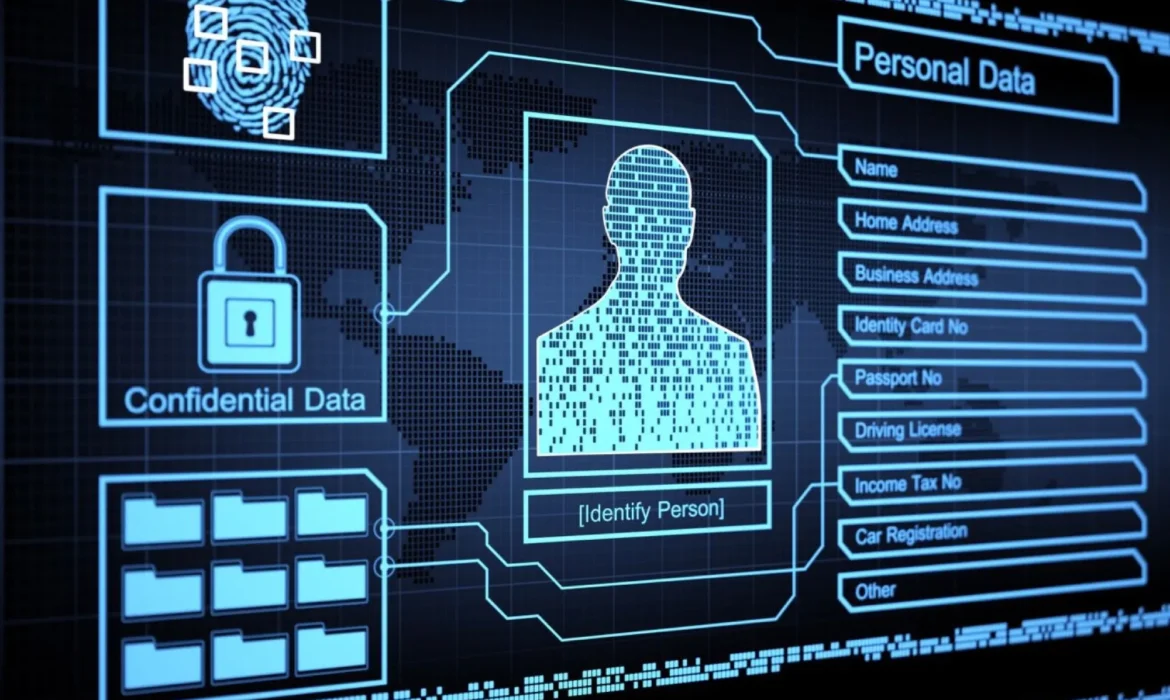
In today’s digital economy, data is often described as the new gold. The comparison reflects the enormous value that information has gained in the modern world. Companies, governments, and organizations rely on data to make decisions, develop technologies, improve services, and create new business models. Much like gold once represented wealth and power, data has become one of the most valuable resources of the 21st century.
However, unlike traditional assets such as land, buildings, or financial instruments, data exists in a legal grey area. Despite its growing economic importance, the ownership and control of data remain unclear in many legal systems around the world. The fundamental question remains unanswered: who actually owns data?
This question is becoming increasingly important as businesses collect enormous amounts of personal, commercial, and operational information. While companies may store and process data, does that automatically mean they own it? Can individuals claim ownership over information about themselves? Can data be sold, inherited, used as collateral, or seized by authorities?
These questions reveal a major challenge of the digital era: the value of data has grown faster than the laws designed to regulate it.
The Legal Challenge of Treating Data as Property
Traditional property law has historically been developed around physical objects and clearly defined rights. It determines who owns a particular asset, how that asset can be used, whether it can be transferred to another person, and what happens if disputes arise.
For centuries, property law has focused on tangible things such as land, houses, vehicles, and other physical possessions. It also covers certain intangible rights, such as shares or financial claims. However, data does not fit neatly into either category.
Unlike a physical object, data cannot be physically possessed in the traditional sense. A piece of information can exist in multiple places at the same time, be copied infinitely, transferred instantly, and used by multiple parties simultaneously. This creates a fundamental challenge for legal systems based on the idea that ownership requires exclusive control over an identifiable object.
Because of this, data currently does not fully fit within existing property law frameworks. In many jurisdictions, data does not have a legally recognized owner in the same way that physical assets do. As a result, questions about control, access, transfer, and protection become much more complicated.
Without a clear legal classification, data cannot always function as a traditional property asset. It cannot easily be used as collateral for financial agreements, inherited like other valuable possessions, or subjected to traditional forms of legal enforcement.
The Rise of “De Facto Ownership” of Data
Although the law may not formally recognize ownership of data, in practice, someone usually controls it. This has created a situation often described by legal experts as “de facto ownership.”
In simple terms, the organization or individual that possesses and manages data often becomes the practical controller of that information. A technology company storing user data, a hospital managing medical records, or a business collecting customer information may effectively determine how that data is used.
However, possession does not necessarily mean legitimate ownership.
The party holding the data may not always be the one with the strongest moral or legal claim to it. For example, a company may collect large amounts of consumer information, but the data itself may originate from millions of individuals whose actions, preferences, and identities created that information.
This creates a situation where control often depends on who collected the data first or who has the strongest technological infrastructure to store and process it. In practice, this can resemble a “first come, first served” approach rather than a carefully balanced legal system.
The result is an environment where powerful organizations with advanced data capabilities may gain significant influence simply because they have the resources to collect and manage information at scale.
Contracts as a Temporary Solution
Because property law does not provide a complete answer, businesses have increasingly turned to contracts to define their relationships with data.
Companies often include clauses stating who can use certain datasets, who has access rights, and what happens when a business relationship ends. Terms such as “data ownership” and “data owner” are frequently used in commercial agreements, even though these concepts do not always correspond to formal property rights.
Contracts provide an important practical solution. They allow businesses to establish rules and expectations between parties. For example, a company working with a technology provider can specify how collected information may be stored, processed, and shared.
However, contractual agreements also have significant limitations.
One major issue is that contracts generally only bind the parties who sign them. If a third party becomes involved — such as creditors, buyers, regulators, or administrators during bankruptcy proceedings — contractual agreements may not provide sufficient protection.
Another problem is that contractual rights are usually weaker than traditional ownership rights. A person who has a contractual right to receive data may not have the same legal protection as someone who owns a recognized asset. This difference becomes particularly important when disputes arise or when organizations face financial difficulties.
Therefore, while contracts can temporarily manage some aspects of data relationships, they do not completely solve the deeper question of legal ownership.
Why Property Law Struggles With Digital Information
To understand whether property law could eventually apply to data, it is necessary to examine the basic principles behind property rights.
Property law depends on a connection between a right and a clearly identifiable object. Ownership exists because there is something specific that can be owned. A person can own a house, a car, or a piece of land because these objects are separate, identifiable, and distinguishable from everything else.
Data creates a much more complicated situation.
A dataset can be copied, modified, combined with other datasets, and distributed across multiple systems. A single piece of information may exist in countless locations simultaneously. Determining where one dataset begins and another ends is often extremely difficult.
For property law to apply effectively, the object being owned must have a certain level of independence and identification. Just as someone can own an entire table but not a single table leg separated from the object’s intended function, the law needs a clearly defined object before it can establish ownership rights.
The challenge for data is determining whether digital information can be separated and identified in a way that allows it to become a traditional object of property rights.
This question requires cooperation between legal experts, technology specialists, and data scientists. The solution may not come from law alone but from developing new technical methods for identifying, structuring, and managing digital information.
What Property Law Could Offer the Data Economy
Despite these challenges, property law could provide significant advantages if adapted to the digital world.
One of the greatest strengths of property law is that it offers a structured and comprehensive system of rules. Instead of creating separate regulations for every possible data-related situation, property law provides fundamental principles that can apply across many circumstances.
If data could become recognized as an object of property rights, many currently unresolved issues could receive clearer answers. Ownership, transfer, inheritance, security rights, and legal enforcement could all become easier to manage.
For businesses, this could create greater certainty. Companies investing heavily in collecting and analyzing data would have clearer protection regarding their assets. Financial institutions could potentially recognize data as collateral, allowing organizations to use their information resources in new ways.
For individuals, stronger legal frameworks could provide greater control over personal information and clarify their rights regarding how their data is collected and used.
Data Ownership and the Future of Digital Rights
The debate over data ownership is not simply a technical or legal issue. It reflects a much larger question about power and value in the digital economy.
As data becomes increasingly central to artificial intelligence, automation, and economic decision-making, determining who controls information will become one of the defining challenges of the coming decades.
The current situation — where data has enormous economic value but uncertain legal status — cannot continue indefinitely. Businesses need predictable rules, individuals need stronger protections, and governments need effective frameworks to manage digital resources responsibly.
However, creating a legal system for data ownership will require careful consideration. Simply applying traditional property concepts to digital information may not be enough. Data behaves differently from physical assets, and any future framework must recognize its unique characteristics.
The goal should not only be to assign ownership but also to create a balanced system that protects innovation, encourages responsible data use, and respects individual rights.
The Future: From Data Control to Data Stewardship
The future of data regulation may ultimately move beyond the simple idea of ownership. Instead of asking only “who owns data?”, society may need to ask “who is responsible for managing data?”
Data stewardship could become a more appropriate concept for the digital age. It recognizes that information is not merely an object to possess but a resource that carries responsibilities.
Organizations that collect and use data may need to demonstrate not only that they have access to information but that they handle it ethically, transparently, and securely.
As the data economy continues to expand, the legal systems surrounding it will need to evolve. The challenge is to build a framework that acknowledges the extraordinary value of data while ensuring that this value is created and shared fairly.
Data may indeed be the new gold — but unlike gold, it is created by people, shaped by interactions, and connected to human identity. The question of ownership is only the beginning. The larger challenge is deciding how this powerful resource should be managed in the digital future.